Sep 1, 2026Material
Mirror vs Brushed Stainless Steel: How to Choose
A designer-focused guide to choosing mirror or brushed stainless steel for furniture, screens and interior projects.
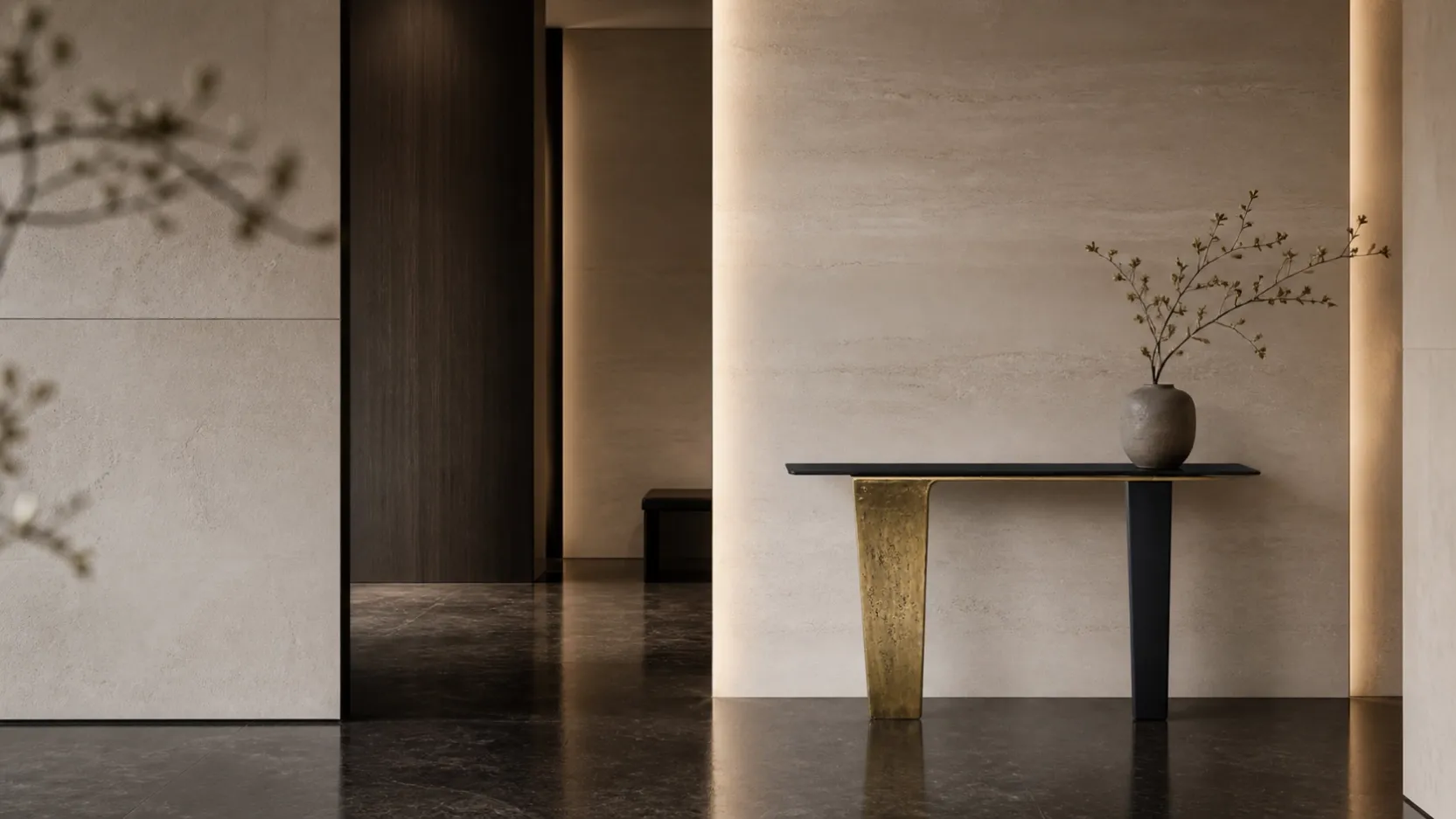
Mirror and brushed stainless steel can begin with the same base material yet create completely different interiors. One turns its surroundings into part of the object; the other softens reflection into a controlled linear texture.
For furniture, screens and interior elements, the right choice is not simply which finish appears more luxurious. It depends on what the surface should contribute to the room, how closely it will be viewed, how often it will be touched and how consistently it must be produced across the project.
What is the practical difference?
A mirror-polished surface is produced through progressively finer polishing and buffing until it becomes highly reflective. Recognised finish references include ASTM No. 8 and EN 2P, although commercial terms such as mirror, super mirror and high-gloss polish do not always describe exactly the same appearance. A good mirror surface reflects a clear image and makes surrounding colour, light and movement visible on the object itself.
A brushed surface is mechanically finished to create a directional grain. Common references include No. 4 and EN 2J, but the visual result varies with abrasive grit, line length, roughness and gloss. Some brushed finishes appear distinctly linear; finer hairline finishes can look smoother and more refined. Grain direction becomes an important part of the design.
Mirror or brushed: a designer's comparison
Mirror stainless steel
Best when:
- reflection is part of the design;
- the piece should feel visually lighter;
- a sculptural form should be emphasised;
- or the surrounding interior is relatively restrained.
Works particularly well with:
- dark marble and deeply coloured stone;
- glass and other visually light materials;
- controlled lighting;
- sculptural furniture;
- and selected statement pieces.
Consider before specifying:
- fingerprints and wiping marks;
- what the surface will reflect from principal viewpoints;
- concentrated downlights and bright windows;
- surface flatness and distortion;
- and the effect of welding, forming, grinding and edge finishing on the final polish.
Brushed stainless steel
Best when:
- the metal should feel quieter;
- the interior is material-led;
- natural materials should remain dominant;
- or a larger surface needs visual restraint.
Works particularly well with:
- travertine and limestone;
- timber;
- textured plaster;
- woven upholstery;
- and other tactile, low-sheen finishes.
Consider before specifying:
- grain direction;
- grain and gloss consistency;
- alignment across adjacent components;
- grazing light;
- and cleaning in the direction of the grain.
This comparison is a starting point, not a style formula. Geometry, proportion, lighting and the materials immediately beside the metal usually matter more than a finish name alone.
Choose mirror when reflection is part of the idea
Mirror stainless steel works best when reflection has a deliberate role. It can visually lighten a console base, make a large element feel less solid or allow a sculptural surface to borrow colours from stone, timber, art and surrounding architecture. On curved forms, reflection changes continuously as the viewer moves, giving the piece a more fluid and expressive character.
This quality suits statement furniture, decorative screens, mirrors, art objects and selected feature elements. It can be especially effective in darker interiors because it captures highlights and movement. It can also make compact spaces feel more open, although it should not be treated as a substitute for a well-planned mirror.
The same reflectivity requires restraint. A mirror-finished piece placed opposite strong downlights, a busy window or several other glossy surfaces may produce visual noise. The surface will reflect everything around it, including objects the designer did not intend to emphasise. Before specifying it, consider the principal viewing angles and what will actually appear in the reflection.
Choose brushed when the metal should feel quieter
Brushed stainless steel gives metal presence without creating a sharp mirrored image. Its linear texture reads as controlled, architectural and material-led. It often works well where the aim is to add precision without making every surface compete for attention.
Brushed metal can sit comfortably beside travertine, limestone, timber, textured plaster and woven upholstery. The restrained reflection allows the natural variation of these materials to remain dominant. On larger furniture bases, cabinet details or screens, a consistent grain can reinforce proportion and direction.
Grain direction must be specified rather than left to chance. Vertical grain can make an upright element feel taller; horizontal grain may visually lengthen a console or panel. Adjacent components should be reviewed together because mismatched direction is particularly visible under grazing light.
How finish relates to interior style
Mirror stainless steel often sits naturally within sculptural, contemporary and modern luxury interiors, and in selected modern Art Deco schemes where reflection is used with control. It can strengthen a focal form or introduce movement into a restrained architectural background.
Brushed stainless steel often supports warm minimalism, contemporary and quiet luxury interiors, as well as restrained architectural spaces where timber, stone, plaster or textiles should remain dominant.
These are tendencies rather than rules. A brushed finish can make a highly sculptural object feel more controlled, while a mirror accent can bring energy to an otherwise quiet material palette. Form, proportion, light and adjacency should lead the decision; style labels should only help describe the intended effect.
Lighting changes both finishes
Finish samples should be reviewed under the lighting conditions of the intended interior. Mirror steel under a narrow spotlight can create hard highlights, while diffuse daylight may produce a calmer and more expansive reflection. Brushed steel can appear almost matte from one angle and noticeably brighter from another because light catches the grain.
Warm light, cool daylight, dark ceilings and nearby coloured materials all influence the perceived tone of stainless steel. If a PVD colour is added, these effects become even more important. A small sample reviewed flat on a desk may not predict the appearance of a curved, vertical or large-format component.
Designer note: Review the sample in its intended orientation. A finish judged horizontally on a sample table may behave very differently when installed vertically, curved or under grazing light.
Fingerprints, cleaning and contact
No decorative metal finish is maintenance-free. Mirror surfaces tend to make fingerprints and wiping marks more visible, particularly under directional lighting. This does not automatically make them unsuitable, but it makes placement important. A mirror-finished pedestal that is rarely touched is different from a cabinet pull, table edge or hospitality surface handled throughout the day.
Brushed finishes generally disguise light handling marks better because the grain breaks up reflections. Scratches that follow the existing grain may also be less visually disruptive than random scratches on a mirror surface. However, cleaning must follow the grain, and aggressive abrasive pads can alter the texture or create inconsistent patches.
For high-touch applications, discuss cleaning expectations, access and the possible use of an anti-fingerprint treatment before final approval. The visual effect of any coating should be checked on a real finish sample rather than assumed.
How to match stainless steel with other materials
Stone
With pale limestone or travertine, brushed stainless steel usually creates the quieter transition, allowing pore structure and tonal variation to remain dominant. Mirror steel creates a crisper, more luminous contrast.
Against dark or strongly veined marble, mirror stainless steel can intensify highlights and movement. Brushed stainless steel can prevent the combination from becoming overly dramatic when the stone already carries the visual focus.
Timber
Brushed stainless steel often gives timber a precise, architectural counterpoint without competing with the grain. Mirror metal can still work, especially as a controlled focal accent, but repeating it across several surfaces may weaken the warmth and tactility that timber contributes.
Glass
Mirror stainless steel can reinforce transparency and visual lightness by reflecting the surrounding room. Brushed frames and junctions make the construction more legible and can give a glass element a calmer architectural edge.
Textured and soft materials
Woven upholstery, plaster, leather and other low-sheen surfaces can absorb and soften the hardness of metal. Brushed stainless steel extends that restraint. Mirror stainless steel creates a stronger contrast and is most effective when it is the intentionally active surface rather than one of several competing glossy elements.
The best combination depends on hierarchy. Decide which material should lead. If stone has strong movement, a quieter metal may support it. If the furniture form is intentionally sculptural and the surrounding materials are restrained, mirror steel can become the focal surface.
See metal in context
The public KingDeco Studio product records do not currently state whether the following pieces use mirror or brushed stainless steel. They are included to show how geometry, scale and neighbouring materials change the role a metal finish would play; confirm the current material and finish before specification.
L1530 Console Table
Its shallow 300 mm depth and asymmetrical material composition make it a useful reference for judging whether metal should become a reflective focal plane or a quieter supporting element in a restrained interior.
L1280 Console Table
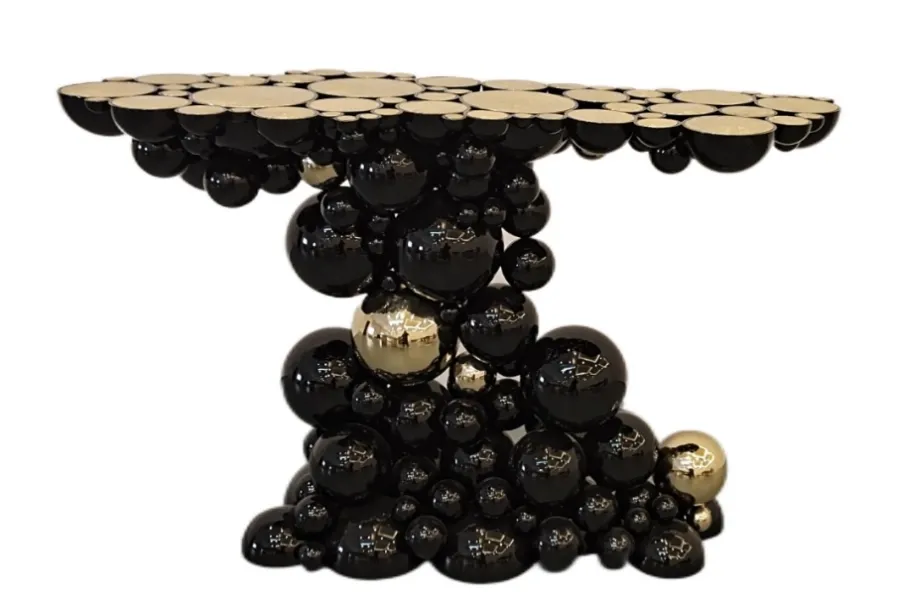
The clustered sculptural form demonstrates why reflected surroundings, viewing angle and surface continuity matter when a metal object is read from several directions.
D1228 Coffee Table
The broad, low coffee-table format is useful for considering how finish behaves under overhead light and beside upholstery, flooring and other tactile materials.
Explore the complete KingDeco Studio collection for current product information, or discuss verified material and finish options through Bespoke.
Common specification mistakes
The first mistake is writing only “mirror stainless steel” or “brushed stainless steel” without an approved visual standard. Finish terminology varies, and recognised designations describe production methods more reliably than they guarantee an identical appearance.
The second is approving a very small sample for a large surface. Large panels reveal waviness, grain variation, seams and reflections differently. Curved pieces should be assessed with the geometry in mind.
The third is ignoring batch consistency. For repeated furniture, screen panels or project quantities, finish direction, gloss and acceptable variation should be agreed before production.
The fourth is selecting a finish without considering fabrication. Welding, grinding, forming and edge treatment can affect the final appearance. The specification should cover visible joints, corners and transitions, not only the centre of a flat sample.
A designer's decision framework
Use these six questions before approving a finish:
- Should the metal reflect the room or support the room? Mirror makes the surroundings part of the object; brushed gives the metal presence while allowing adjacent materials to lead.
- Is the piece a focal point or part of the architectural background? A focal object can carry more reflection and movement. Repeated or background elements often benefit from restraint.
- What materials sit directly beside it? Review the actual stone, timber, glass, plaster and upholstery palette rather than assessing the metal in isolation.
- How much direct or grazing light reaches the surface? Map downlights, windows and viewing angles. Both finishes can change substantially as light moves.
- How often will it be touched? Consider fingerprints, cleaning access and the effect of repeated contact at edges, pulls, table rims and hospitality surfaces.
- Is this a one-off piece or a repeated project quantity? Repetition makes control samples, grain mapping, batch consistency and agreed variation more important.
For many interiors, the strongest solution uses both finishes selectively: mirror for a controlled statement surface and brushed metal for surrounding structure or high-contact details. Confirm the decision with finish samples viewed under project lighting and alongside the actual material palette.
Specifying a metal finish?
If you are choosing between mirror, brushed or a custom PVD finish for a furniture or interior project, KingDeco Studio can review the material, lighting, application and surrounding finishes with you.