Oct 1, 2026Buying Guides
Custom vs Ready-Made Wall Art: What to Order When
Ready-made wall art or a bespoke commission? Compare cost, timing, design control and risk—and learn the middle path: adapting an existing design to your project.
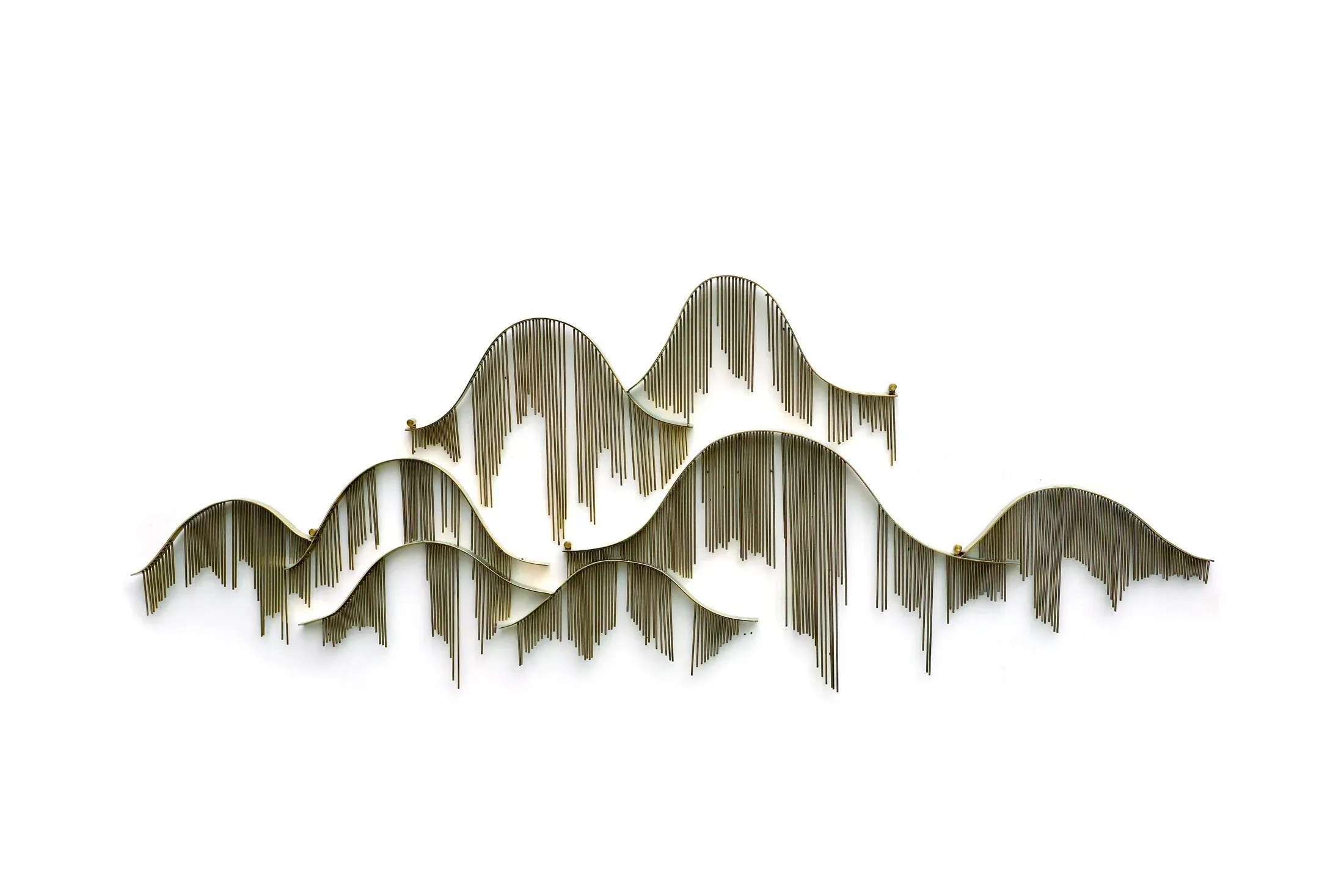
Every project with a wall to fill faces the same fork in the road: specify a ready-made piece from a collection, or commission something custom. The choice is usually framed as budget versus creativity—but for designers and procurement teams the real variables are timing, risk and how much of the design intent the artwork has to carry.
There is also a middle path most catalogues never mention: adapting an existing design. Knowing when each of the three routes fits is what this guide covers.
Ready-made: when speed and certainty win
A finished piece from a collection is the lowest-risk route. What you see is what arrives: the proportions are resolved, the finish is visible, the price is known and the lead time is production and shipping rather than design and development.
Ready-made is the right call when the wall is a standard size, the interior palette is already served by an existing piece, and the programme is tight. A strong collection piece can anchor a room perfectly well—not every wall needs an original.
The limitation is fit. Collection pieces come in the dimensions that suit the collection; a lobby wall that is 7.2 metres wide will not care that the catalogue piece is 1.5 metres. Scale, and sometimes finish, is where ready-made runs out.
Custom: when the artwork has to carry the concept
Custom development is the right route when the artwork carries meaning the interior depends on—a brand story in a hotel lobby, a motif drawn from the building, a scale no catalogue piece reaches, or a palette the collection does not match.
What custom actually adds is control: exact dimensions, divided panels for transport, the finish mapped to the lighting plan, mounting designed for the wall construction. What it also adds is a design phase, sample rounds and a longer programme. The risk is managed by process—elevations, finish samples and (for key pieces) mock-ups—rather than by hope.
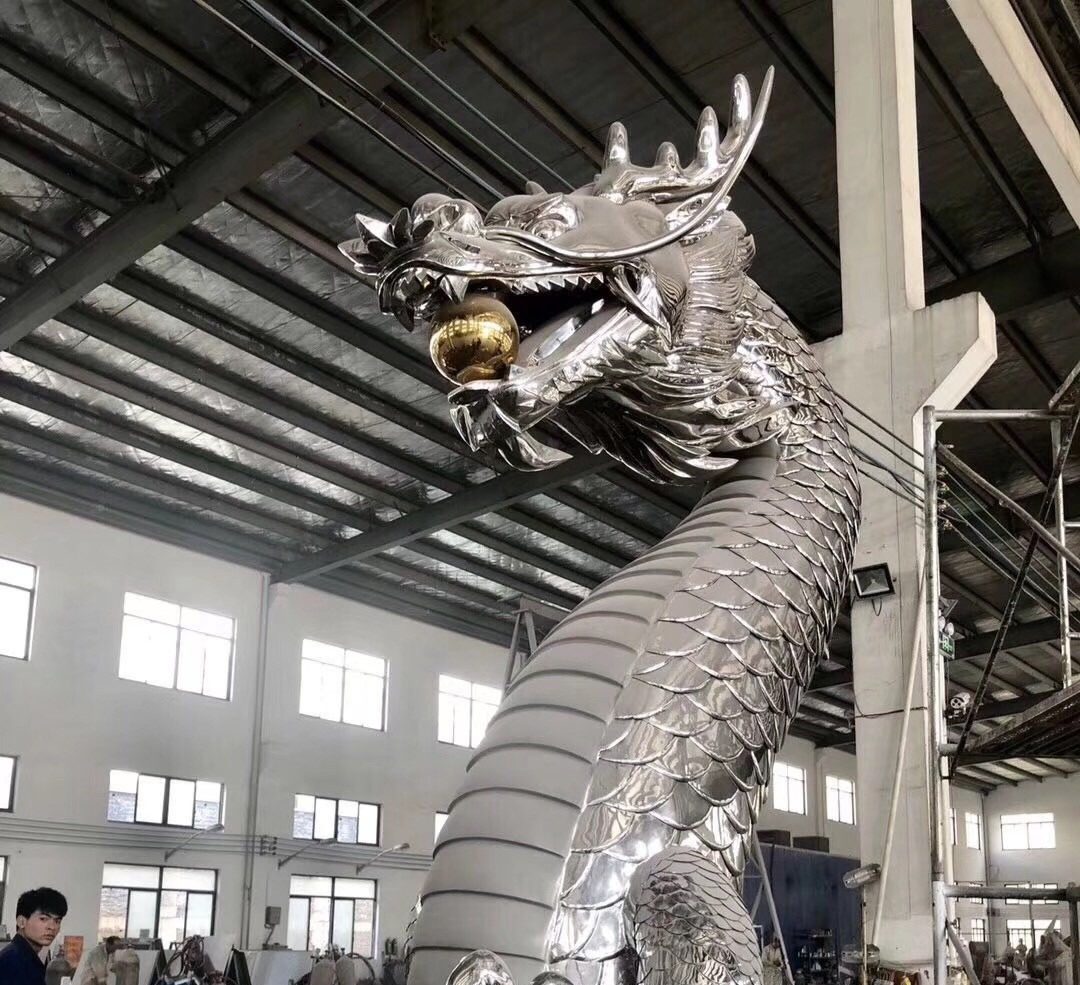
For commercial projects, the custom decision should be made against the checks in how to choose metal artwork for commercial interiors: if the piece is doing conceptual work for the brand or the space, custom pays for itself.
The middle path: adapting an existing design
Between the catalogue and the fully original commission sits the option that serves most projects best: taking an existing design and adapting it.
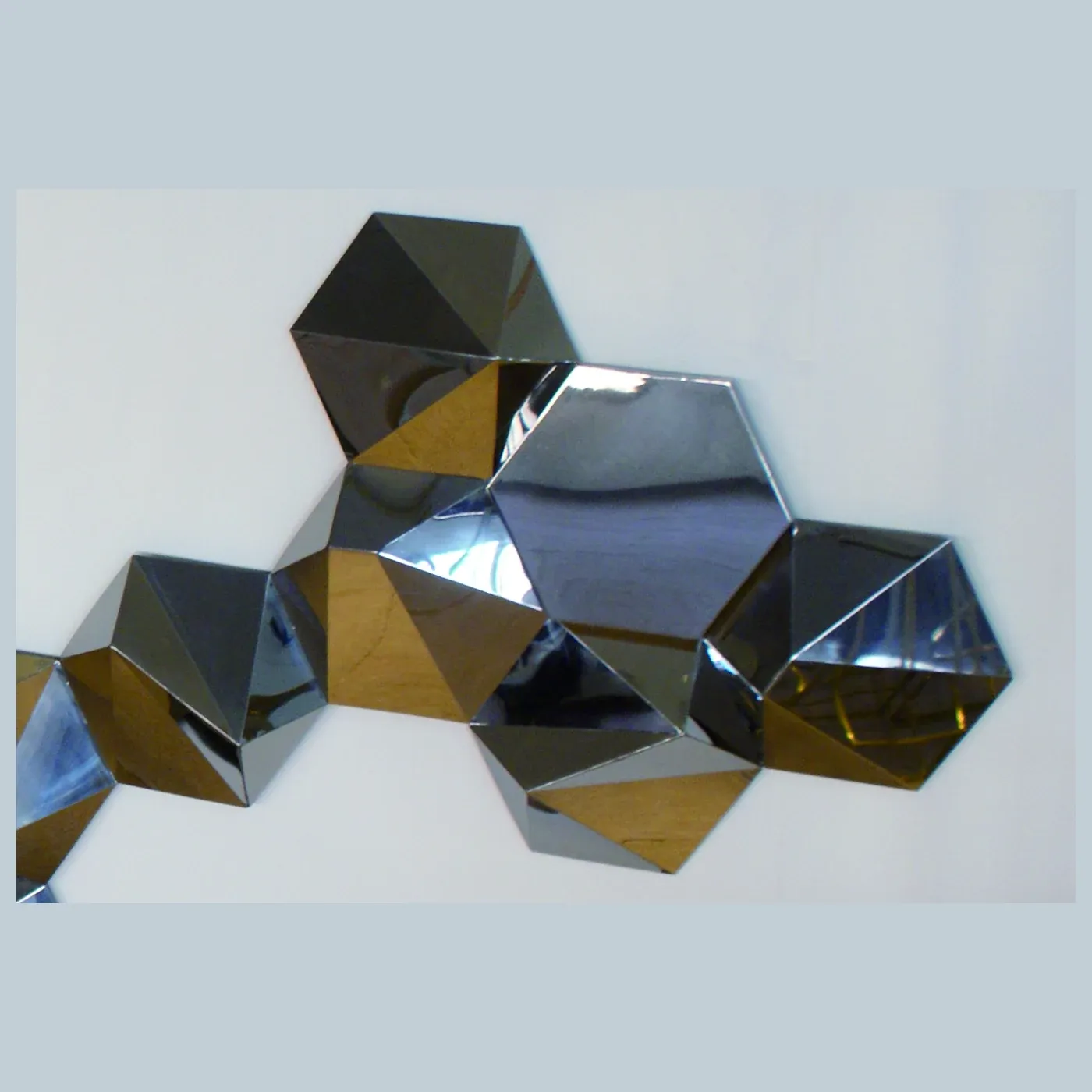
Adaptation can mean changing dimensions to fit the measured wall, re-proportioning a composition, changing the finish to match the palette, adjusting the number of elements in a grouped piece, or re-orienting a design for a different wall shape. The design's proportions, details and production process are already proven—the risk profile stays close to ready-made while the fit approaches custom.
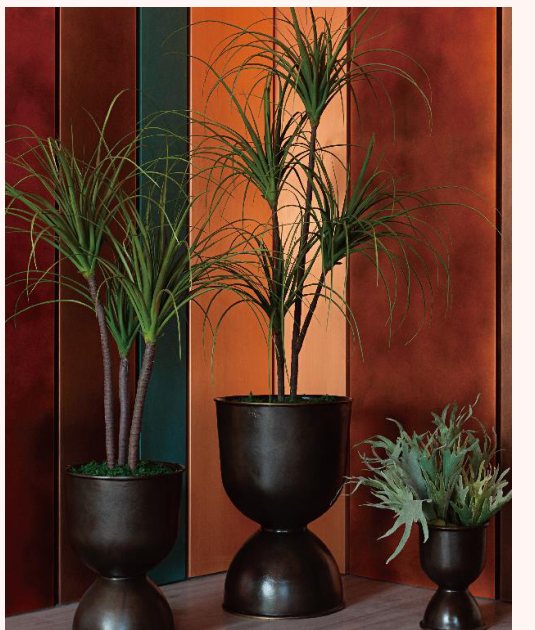
This is where a manufacturer with a collection and its own production floor is genuinely different from a pure trader: the same workshop that made the original piece can modify it without rebuilding the engineering. A Roman-profile planter can become a project's planter at project dimensions; a linear wall composition can extend from two metres to five.
What each route needs from you
Ready-made needs almost nothing: a choice and a shipping address.
Adaptation needs enough to define the change: the wall dimensions or elevation, the target finish, and the reference design. Usually a page of information.
Custom needs the most, but less than people expect: an interior rendering or elevation, the design intent in a few sentences, approximate dimensions and the palette. From that, a manufacturer can propose concept, scale, material and finish options before any production commitment. The claim "we need complete technical drawings before we can talk" is a red flag in a supplier, not a standard.
Timing: the variable that decides most projects
As a practical planning frame—confirmed per project, not a universal rule—ready-made collection pieces move on production-and-shipping time; adapted pieces add a design-confirmation step that is usually measured in days to a few weeks; fully original commissions add concept development and sampling measured in weeks. International shipping and installation scheduling sit on top of all three.
Whichever route a project takes, the decision point is the same: the earlier the artwork route is fixed, the more the programme protects itself.
Choosing between the three
A quick summary:
- Ready-made: standard wall, tight programme, palette already served.
- Adapted existing design: non-standard size or finish, moderate programme, design intent served by a proven concept.
- Custom: the artwork carries brand or concept meaning, unusual scale or setting, programme allows development.
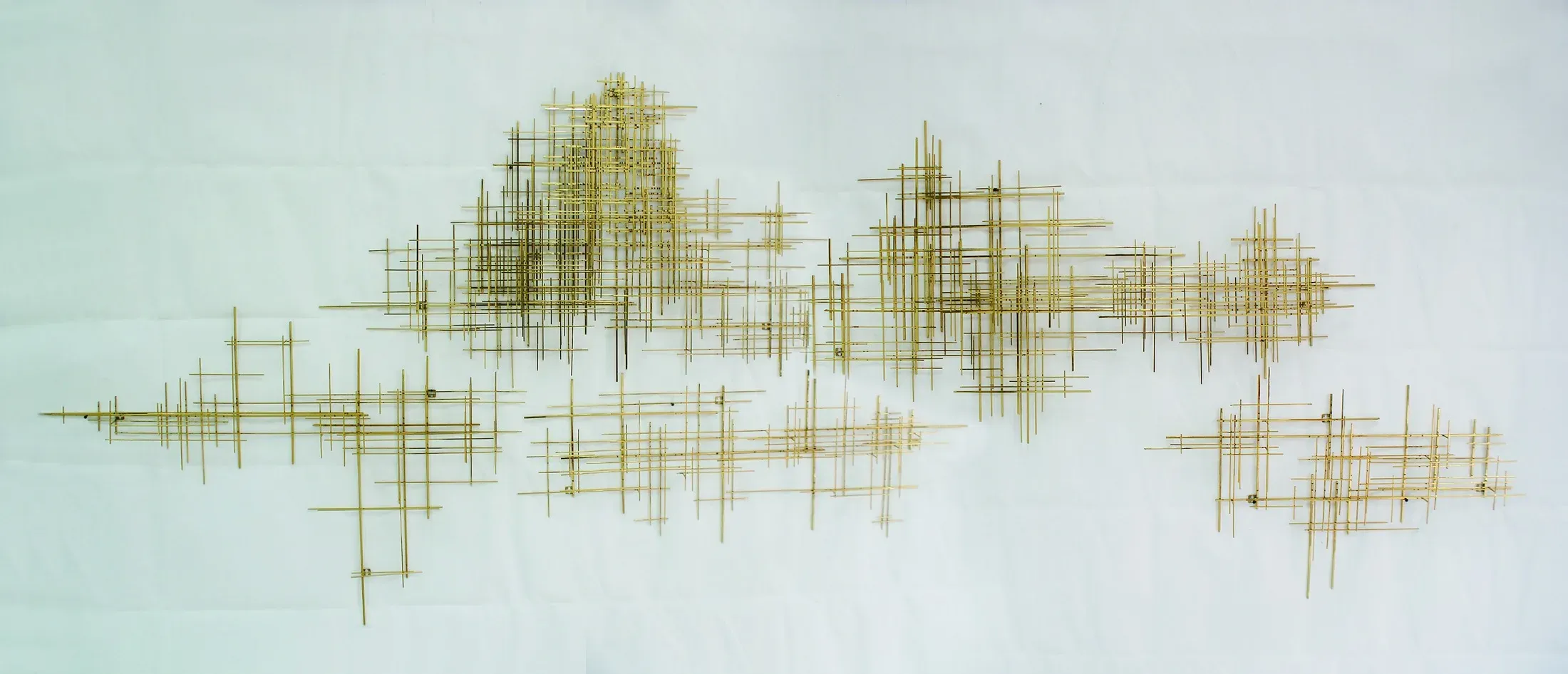
KingDeco Studio works all three routes from the same production floor—collection pieces, adapted designs and original commissions in stainless steel, brass and PVD finishes. Browse the wall art collection, read about the studio's bespoke process, or send a rendering or reference image to get a route recommendation for your wall.