How to Choose Metal Wall Art for an Interior
Choose metal wall art by matching its silhouette, depth, finish and reflected light to the architecture of the room.
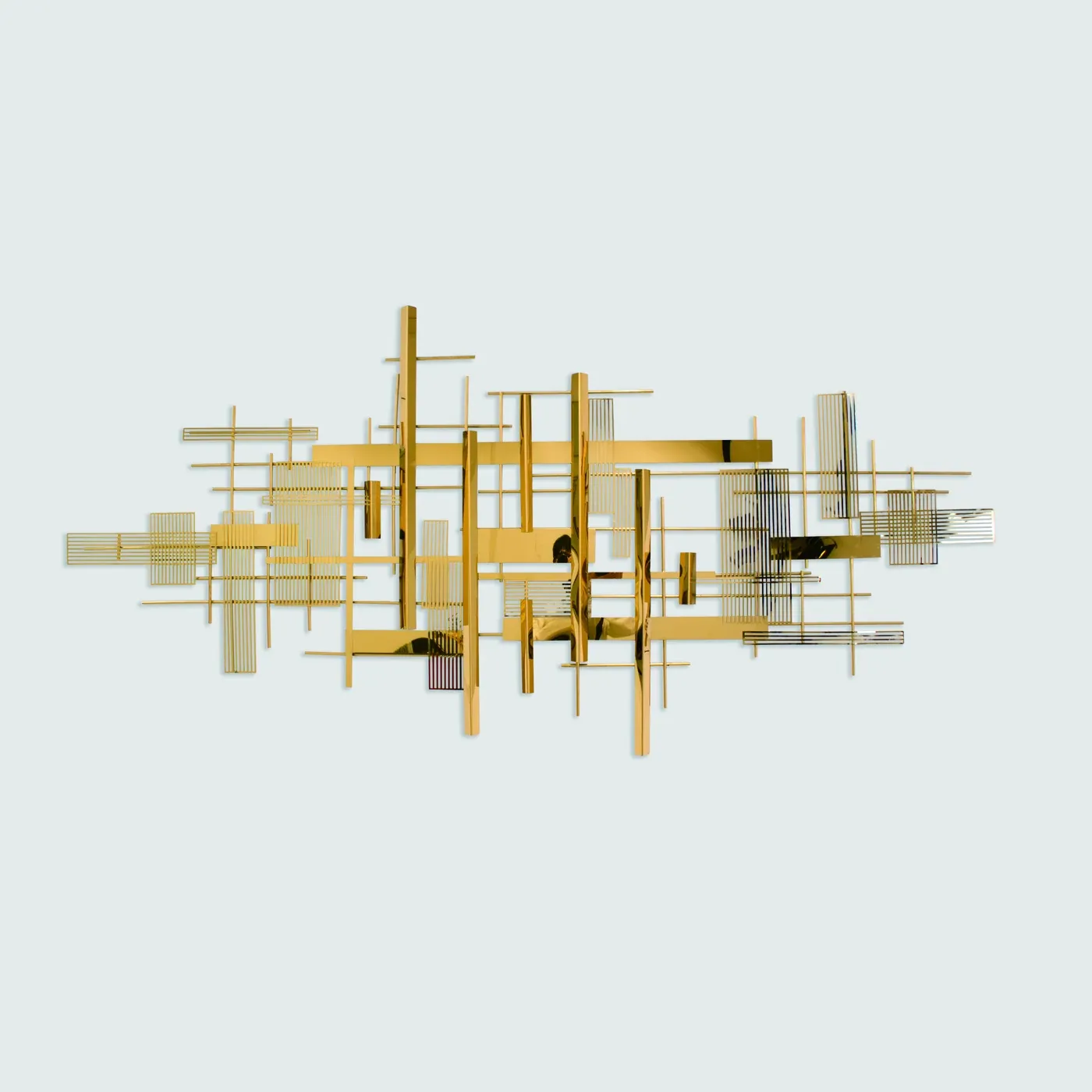
Metal wall art can behave like a picture, a relief sculpture or a piece of architecture. It can create a focal point, carry a material palette across a room and add depth without occupying floor space. The best choice is not simply the design with the strongest first impression. It is the work whose form, finish, scale and fixing belong to the interior.
Define the role of the artwork
Decide what the wall needs before choosing a shape. Should the work anchor a sofa, complete a reception view, animate a corridor or provide a quiet layer behind a console? A focal piece needs a clear silhouette and controlled surroundings. A supporting piece can be lighter, more open and closely related to adjacent materials.
Identify the main viewing distance. Fine details reward close inspection, while bold outlines and larger intervals remain legible across a lobby or open-plan room.
Choose the silhouette before the finish
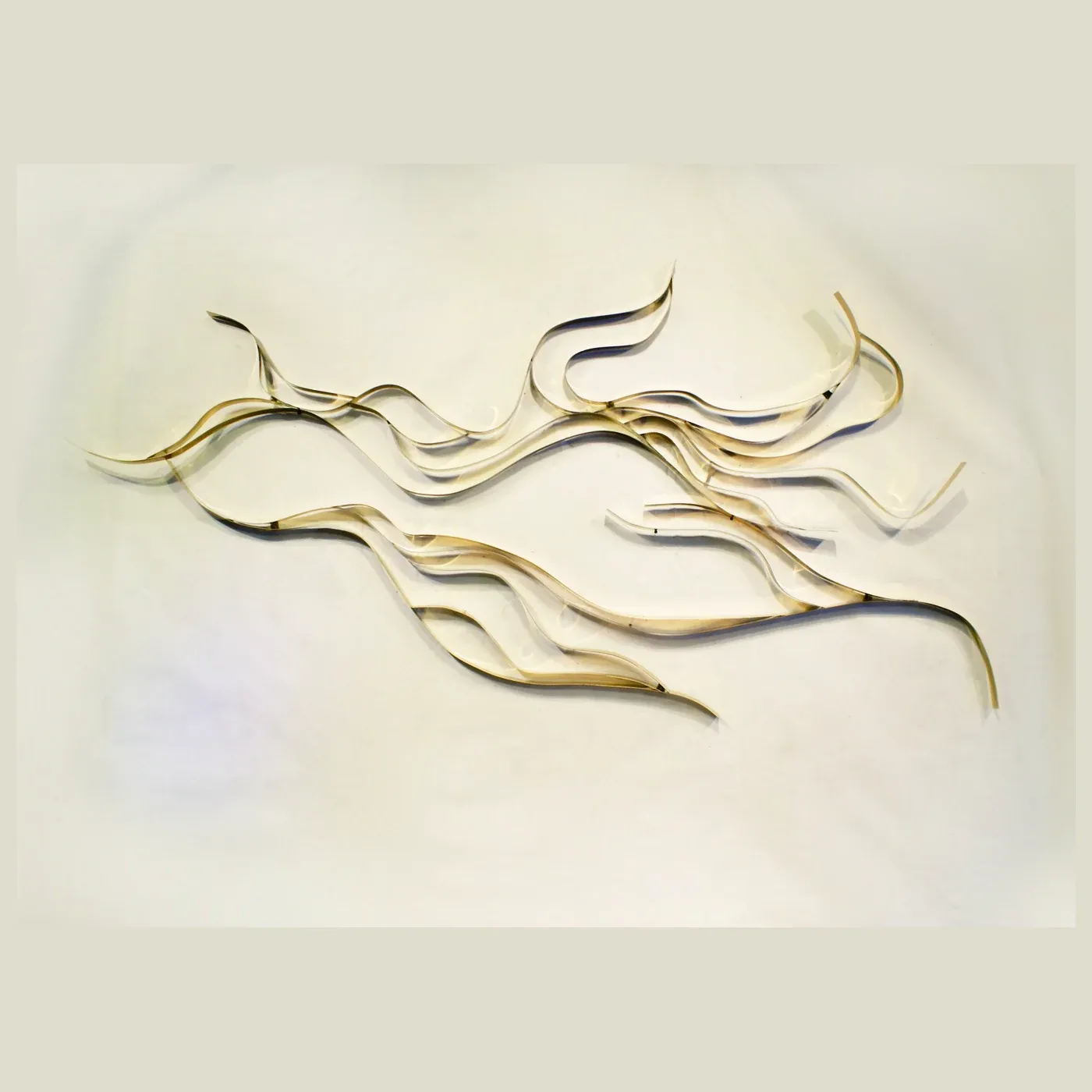
Begin with proportion and direction. Horizontal wall art can connect a long sofa, console or headboard. A vertical piece can strengthen a narrow bay, double-height wall or end-of-corridor view. Circular and clustered compositions soften rectilinear architecture, while linear work can echo joinery, screens or ceiling details.
The perimeter matters as much as the internal detail. View the complete outline at reduced scale: if the form is difficult to read in silhouette, a reflective finish will not resolve the composition.
Understand how finish changes the room
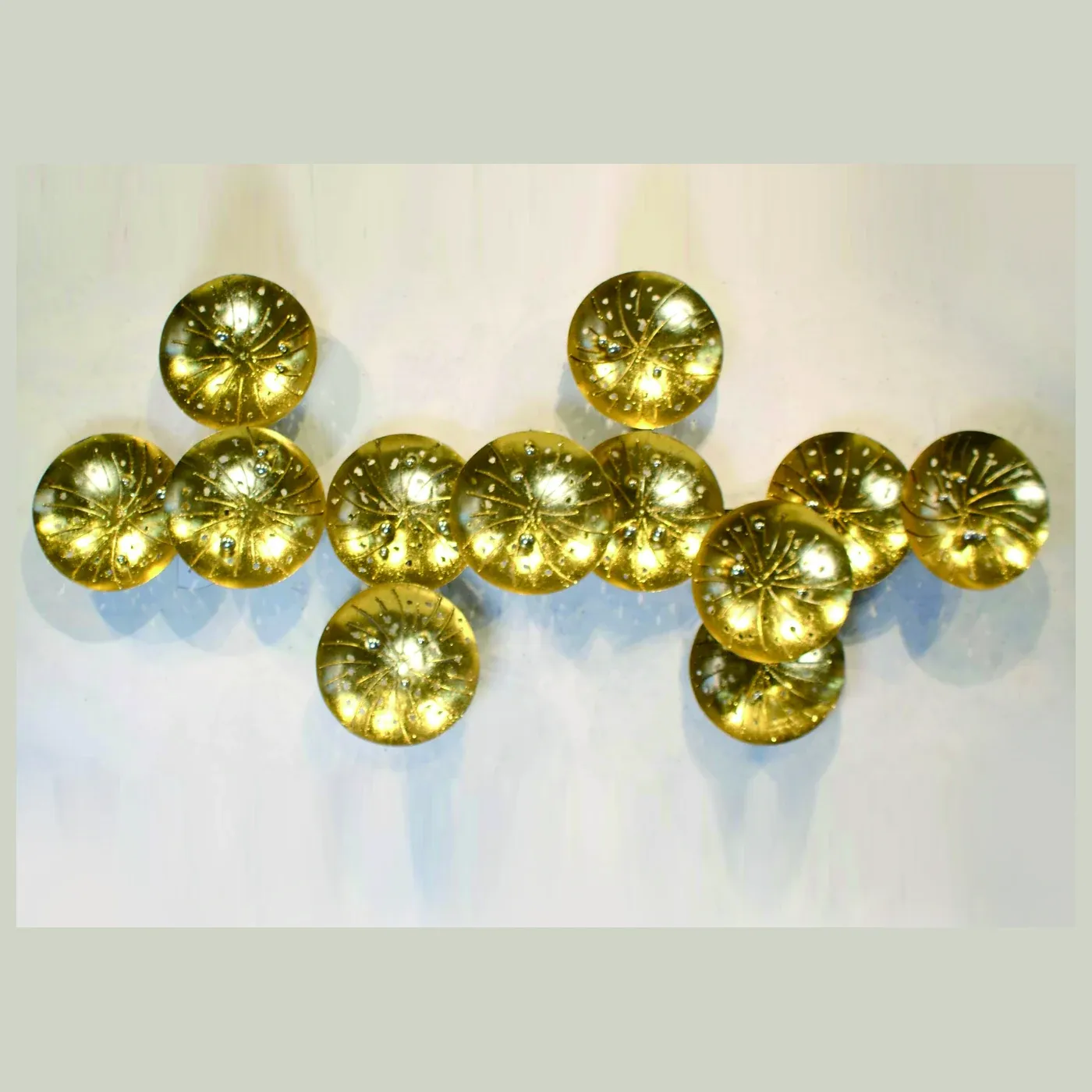
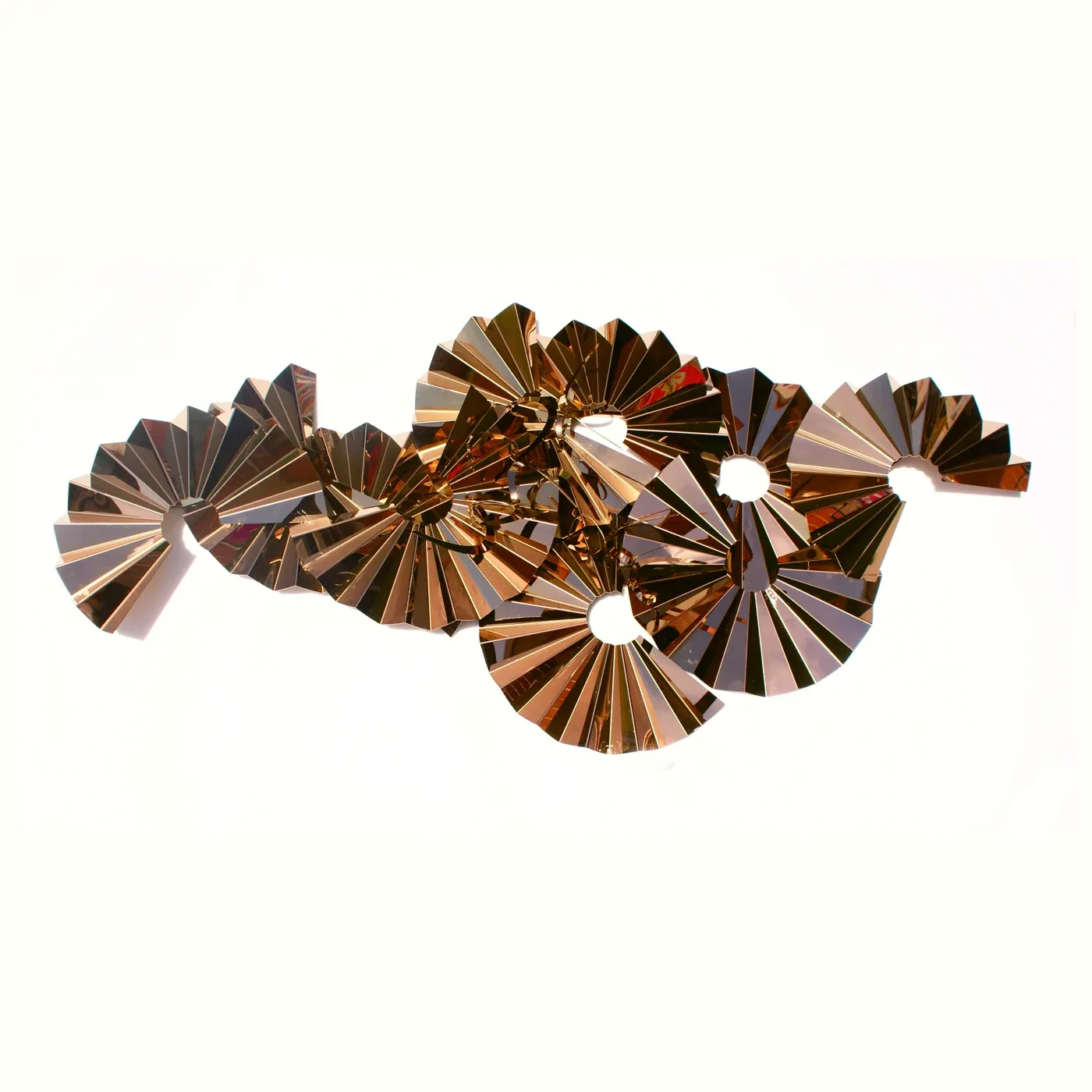
Polished metal reflects colour, movement and light from the interior. It can make a composition feel brighter and more active, but it may also pick up visual clutter or glare. Brushed and satin finishes soften reflections and reveal grain direction. Dark bronze or blackened tones create contrast and visual weight. Warm gold and brass tones connect naturally with timber, amber lighting and many stones, although the exact hue should be reviewed against real samples.
Do not specify only a colour name. Record the substrate, base texture, sheen, approved sample, grain direction where relevant and acceptable variation. Use the mirror and brushed stainless steel comparison when evaluating reflection and maintenance.
Use depth and shadow deliberately
The most distinctive quality of metal wall art is often its projection from the wall. Layered components catch light differently and cast changing shadows. A shallow piece reads more graphically; a deeper relief becomes more sculptural and can change as the viewer moves.
Check maximum depth against circulation, furniture and doors. Deep elements are better suited to generous feature walls than narrow corridors. If the wall is strongly textured, allow enough separation for the artwork to remain visually clear.
Balance the artwork with surrounding materials
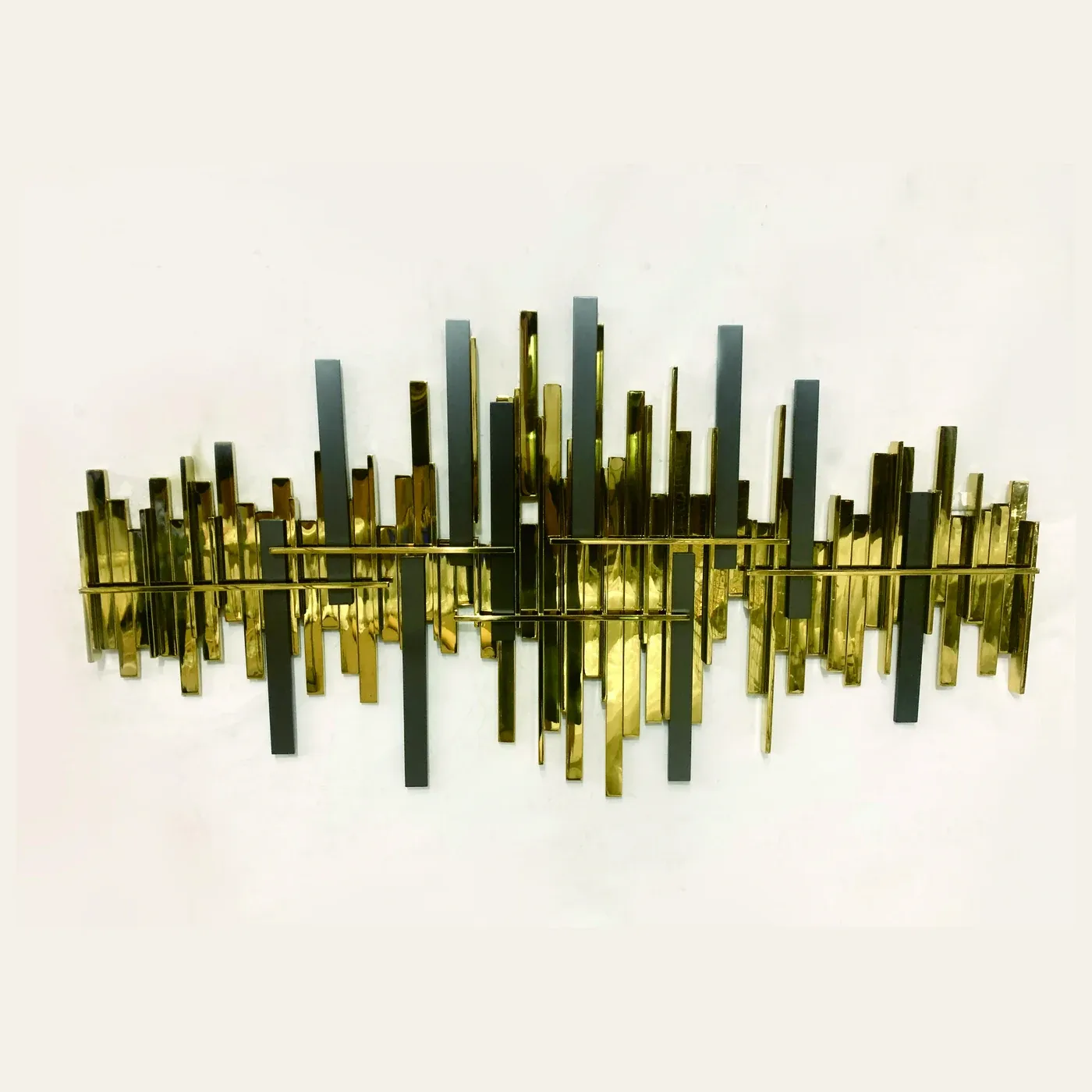
Metal does not need to match every fitting in the room. A controlled contrast is often stronger than an exact near-match. Use one or two relationships to connect the work: a repeated warm tone, a shared linear rhythm, a reflection of the stone colour or a consistent level of sheen.
Avoid placing an intricate reflective work directly against heavily veined stone without testing the combination. Both surfaces may compete. On a quieter plaster, timber or textile wall, the same artwork can read with greater clarity.
Compare a single work with modular art
A single fixed composition gives the designer a defined outside dimension and predictable balance. Modular elements allow the layout to respond to a wall, but the final arrangement must be documented. Record spacing, orientation, fixing sequence and overall dimensions; otherwise the installation can drift from the intended rhythm.
Review fabrication and exposed edges
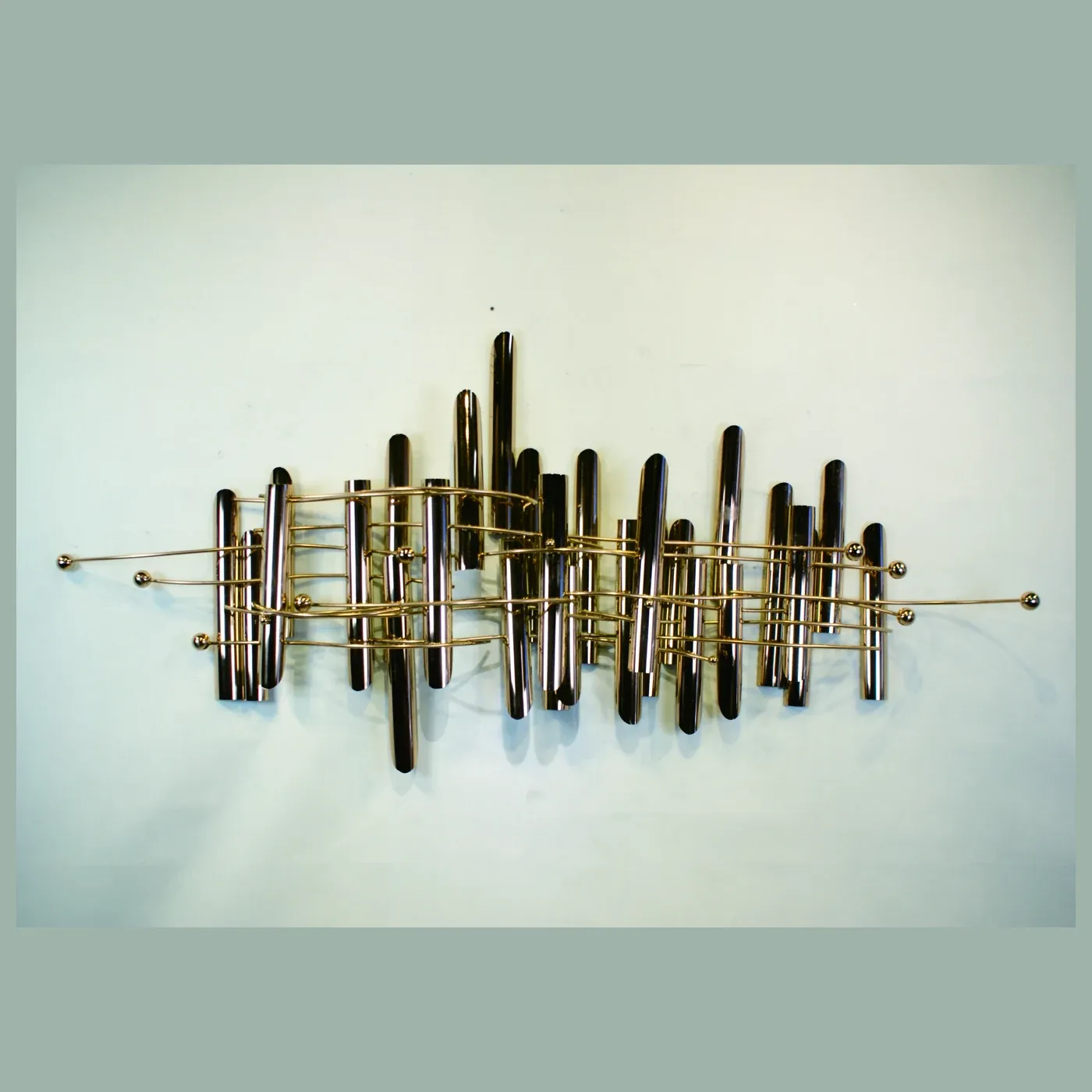
Metal wall art is usually viewed from several angles. Exposed edges, welds, folds, joins and fixing points contribute to the quality of the finished work. Ask how visible faces are finished, how modules align and whether the mounting system can be levelled on site.
For polished work, fabrication and finishing sequence are closely connected. Welded or folded areas may reflect differently from uninterrupted surfaces. Representative samples should include the real edge and connection detail, not only a flat colour coupon.
Plan installation before ordering
Confirm the wall substrate, artwork weight, fixing centres and installation access. Large pieces may need to be divided for transport or lifted by more than one installer. Multi-part work benefits from a full-size paper template or drilling guide.
In hospitality and public interiors, the project team should review fixing, fire, accessibility and local safety requirements. Decorative wall art should not obstruct signage, devices, doors or required circulation.
Metal wall art selection checklist
- Is the overall outline right for the wall and furniture?
- Does the density match the viewing distance?
- Has the finish been reviewed under project lighting?
- Is the depth comfortable for circulation?
- Do the exposed edges meet the expected quality?
- Is the wall substrate suitable for the fixing system?
- Can the complete work be transported to the installation point?
- Is the final arrangement documented for the installer?
Explore KingDeco Studio wall art
Compare sculptural approaches in Wall Art S2-49, S2-32 and S1-137. For custom dimensions, finishes or project quantities, contact KingDeco Studio with the wall elevation, desired scale and material palette.