Oct 2, 2026Buying Guides
Sculptural Planters for Hotel and Retail Projects: A Specifier's Guide
Stainless steel planters as project elements—scale and placement, finish selection, planting considerations, durability and what to confirm before ordering for hotels and retail.
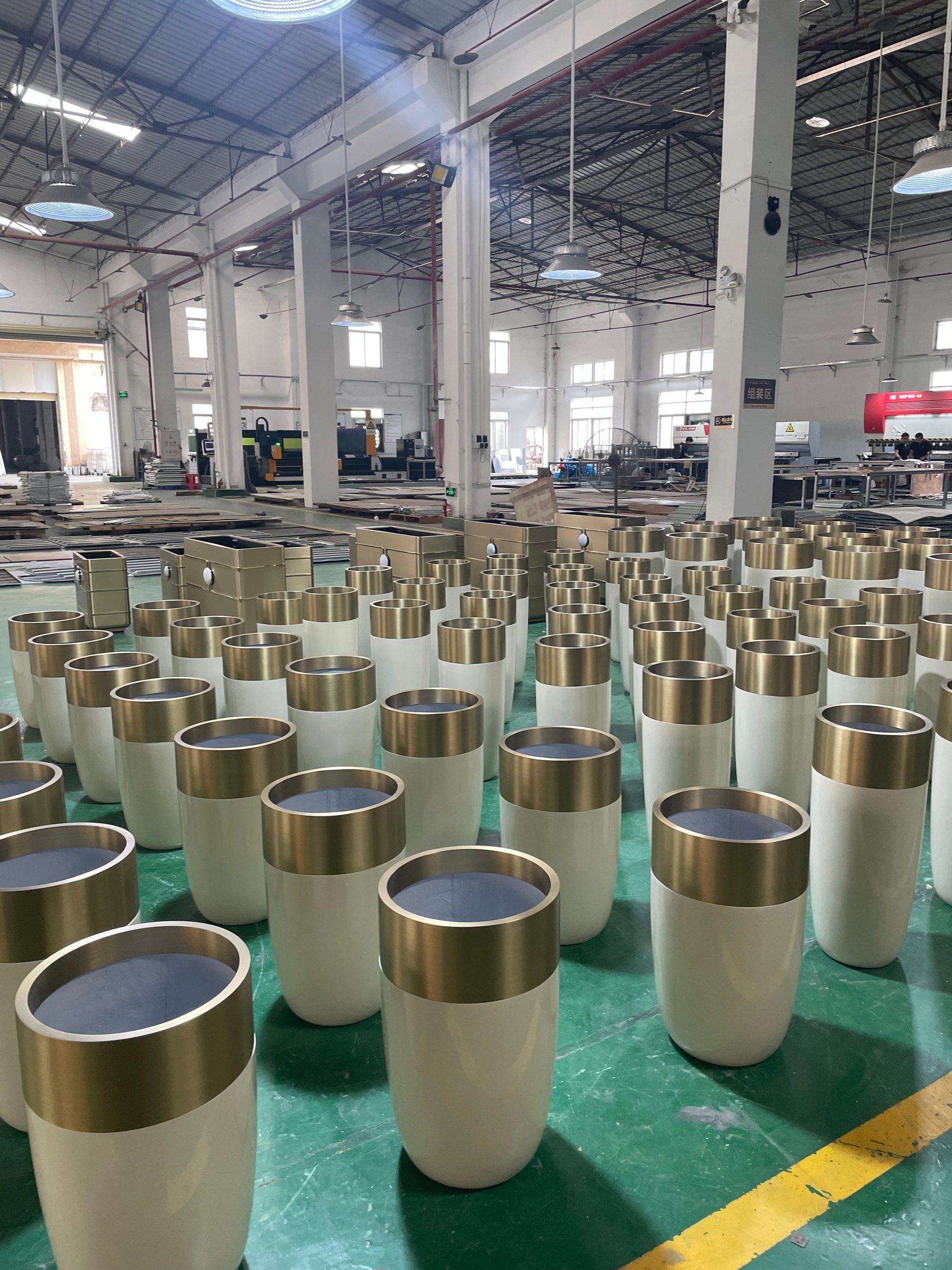
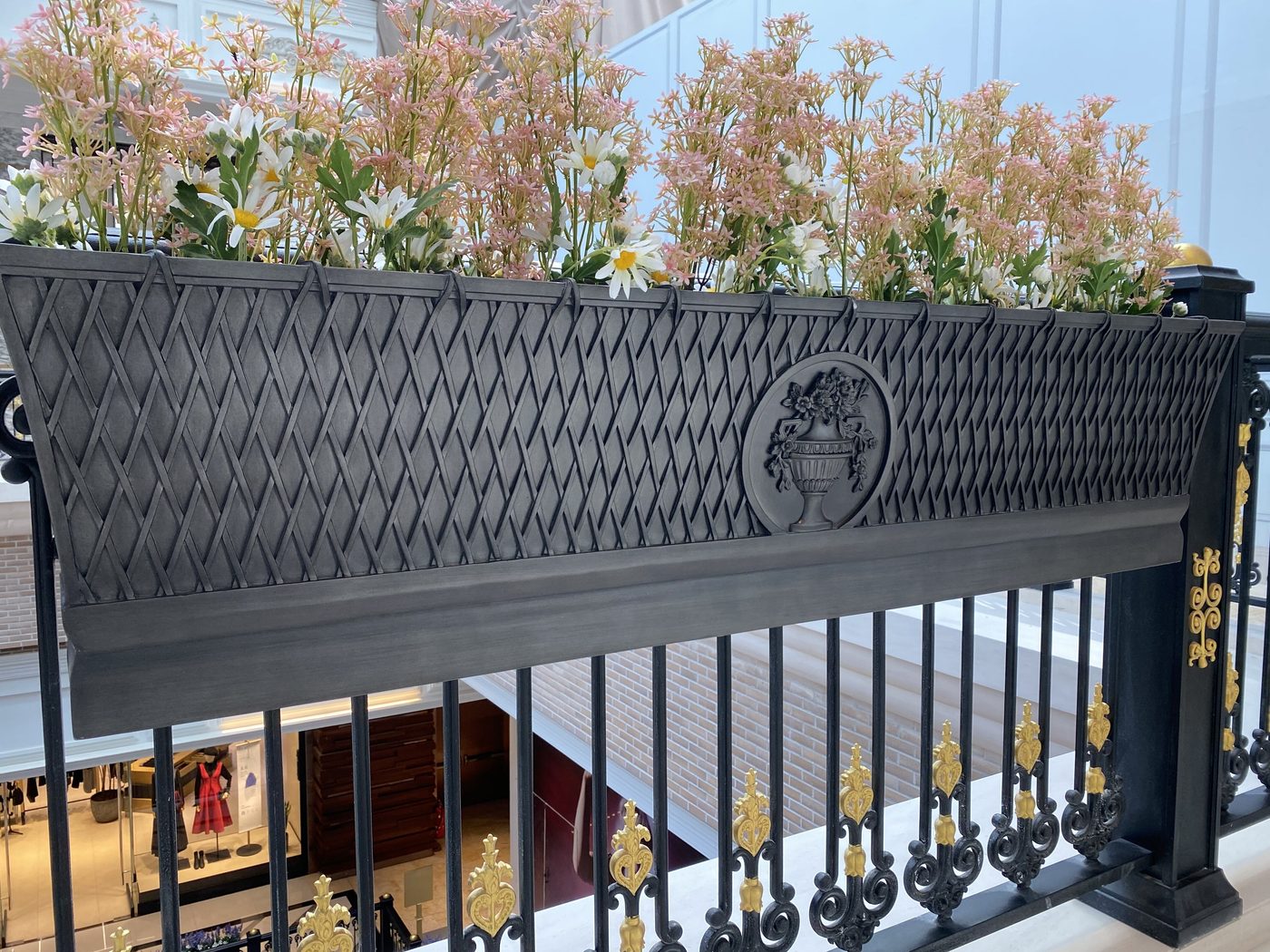
Planters are usually treated as the last line of a project's shopping list. In the strongest interiors they are treated as sculpture—which is exactly what stainless and copper planter collections have become. A faceted mirror planter beside a reception desk does the same visual work as an artwork, with planting as the moving part.
For specifiers, sculptural planters solve a specific set of problems: they define entrances and thresholds, soften hard architectural zones, add controlled greenery without built-in landscapes, and survive commercial use. This guide covers the decisions that matter before ordering them for a project.
Scale first: planters are architecture at floor level
The most common mistake with project planters is going too small. A planter that would look generous in a living room disappears beside a hotel entrance or in a retail atrium.
Floor-standing pieces in commercial spaces typically work when they hold real volume—several hundred millimetres wide at least for statement positions, and proportionally tall for tall surroundings. Tall sculptural stands lift planting to eye level in dining and lounge zones; oversized floor bowls anchor entrances and corridor ends.
Scale should be checked against the elevation like any other project element: entrance height, furniture heights, ceiling lines. A tall planter beside a 3.5-metre door reads very differently from the same planter under a 2.6-metre ceiling.
Finishes: matching the planter to the interior palette
Planters are available in the same finish families as the rest of a metal collection—mirror, brushed, and PVD colourways including champagne, gold, bronze, rose gold and black.
The selection logic mirrors the artwork logic: warm interiors take champagne, brushed gold and copper tones; cool and minimalist schemes take mirror, black or gunmetal; mixed-finish projects use the planter as the repeated accent that ties zones together. The colour families and their behaviour are covered in PVD finishes explained, and the pairing rules in how to mix metal finishes in one interior.
One practical note: brushed and textured finishes hide handling, watering splashes and fingerprints far better than raw mirror. High-traffic positions are a stronger argument for texture than design mood boards usually admit.
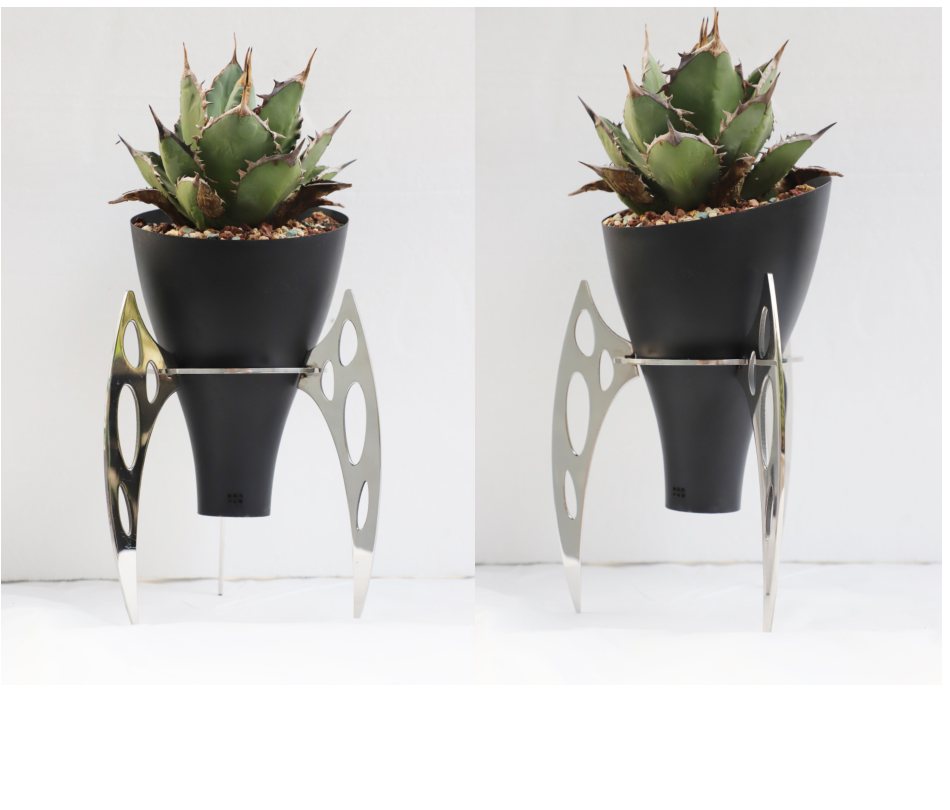
Planting considerations the manufacturer should support
The planter is only half the product; the planting is what guests see growing. Before ordering, confirm:
- Internal liner and drainage. A proper internal liner with drainage protects the metal interior and the plants; directly potting into decorative metal is a maintenance problem.
- Irrigation compatibility. Drip lines and self-watering inserts need space and access—worth specifying for hospitality, where watering discipline varies.
- Plant weight and depth. Root depth for the intended planting determines internal depth; shallow decorative planting and small trees are different products.
- Surface protection at the base. Feet or plinths that keep the metal off wet floors extend the life of even the best finish.
Stainless interiors are inherently more forgiving than most materials here—non-porous, easy to sanitise, tolerant of moisture when drainage is designed in.
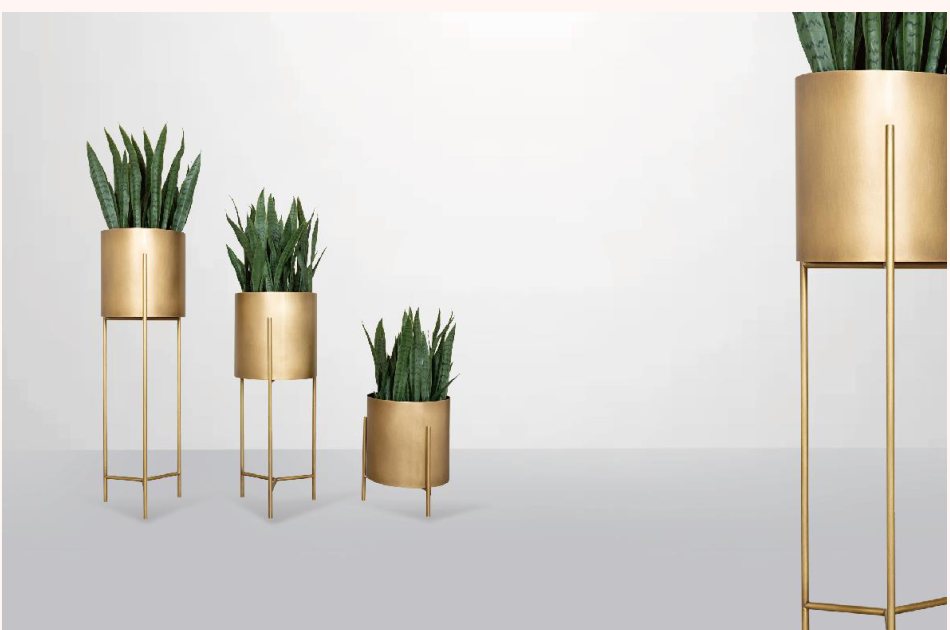
Durability: indoor, covered outdoor and exposed
Stainless and copper planters serve in all three conditions, but the specification changes. Indoors, standard grades with any finish serve indefinitely with basic care. Covered outdoor areas—entrances under canopies, terraces with roofs—still suit 304-grade stainless, with more frequent rinsing in dusty or coastal air.
Exposed and coastal positions deserve 316-grade stainless and corrosion-resistant fixings, plus a scheduled fresh-water rinse. The care fundamentals—soft cloth, mild soap, no chlorine bleach, no abrasives—are in how to care for metal artwork.
Coordinating planters with the wider art programme
Project planters land hardest when they are specified as part of the art and objects programme rather than separately: the planter finish repeating the artwork's metal tones, the sculptural character echoing the wall pieces, the scale logic consistent from lobby to lift lobby.
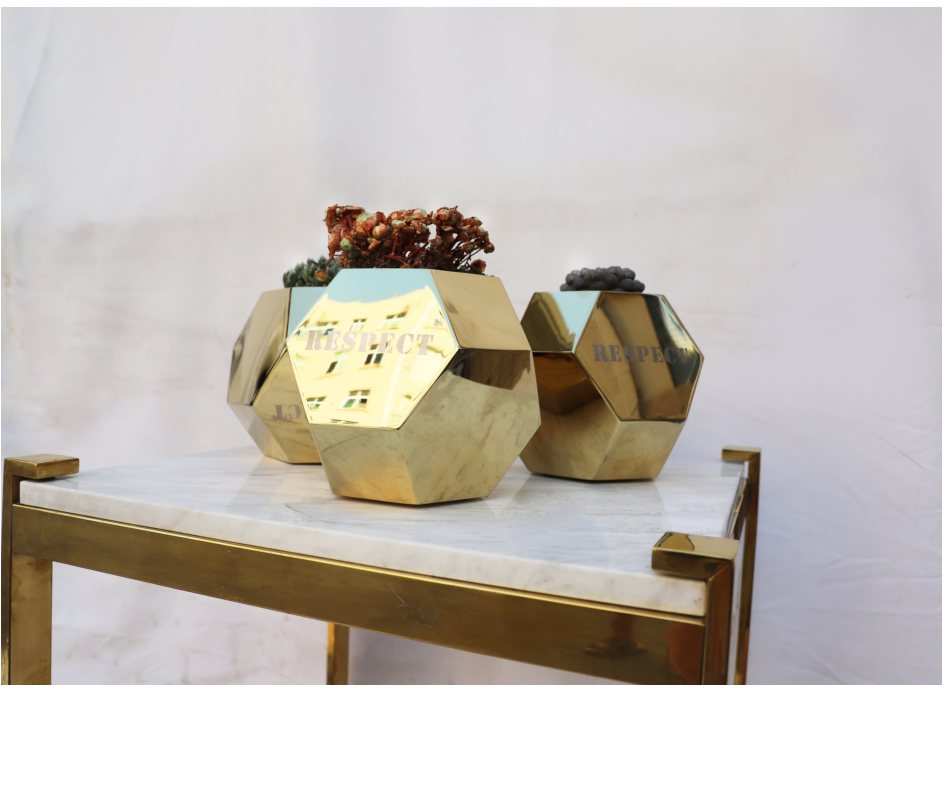
This is also a procurement efficiency: artwork and planters from one production floor ship together, share finish samples, and arrive as one coordinated delivery rather than two mismatched orders.
What to confirm before ordering
A short checklist for project planters:
- dimensions against the elevation, checked at the real ceiling and furniture heights;
- finish and base surface (mirror, brushed, textured; PVD colour if wanted);
- liner, drainage and irrigation approach;
- planting depth for the intended greenery;
- grade of stainless and fixing details for the installation environment;
- packing and consolidated shipping with the rest of the project's metal elements.
Sourcing sculptural planters for your project
KingDeco Studio produces sculptural stainless steel and copper planter collections in Zhongshan, Guangdong—collection pieces and project adaptations, with finish samples, liner and drainage options, and consolidated export packing together with artwork and furniture orders. Browse the collections or contact the studio with your project's planter schedule.