Sep 9, 2026Buying Guides
Statement Wall Art or a Grouped Composition?
Compare one large artwork with a grouped or modular wall composition, then choose the approach that best supports the room.
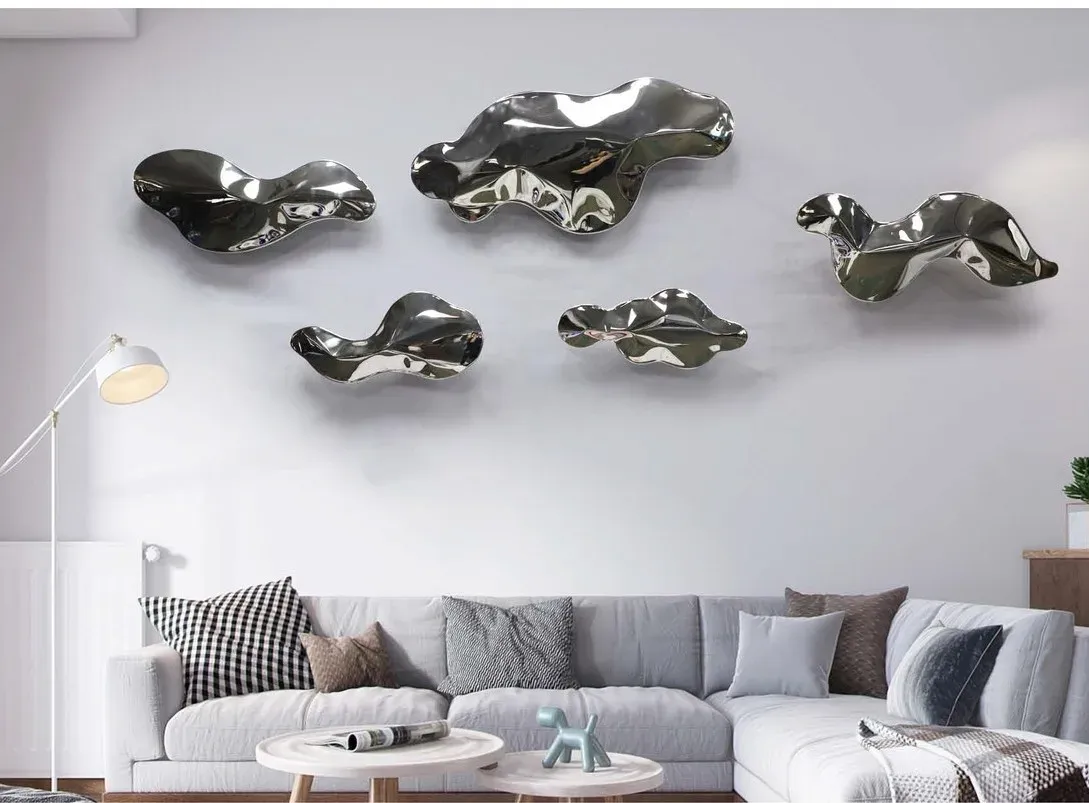
Large interiors do not always need one enormous artwork. A single statement piece can create calm authority, while a grouped or modular composition can bring rhythm, flexibility and a closer relationship with the architecture. The choice should follow the wall, viewing sequence and installation conditions rather than a preference for more or fewer objects.
Choose one statement piece for visual clarity
A single work establishes one outline, one centre of gravity and one clear focal point. It works particularly well above a sofa, reception desk, bed or console where the furniture already defines the composition below.
Choose this approach when the room has several strong materials or architectural details. One confident form can provide presence without adding visual fragmentation. It also simplifies setting-out because the overall dimensions and fixing relationship are defined.
Choose a grouped composition for rhythm and adaptation
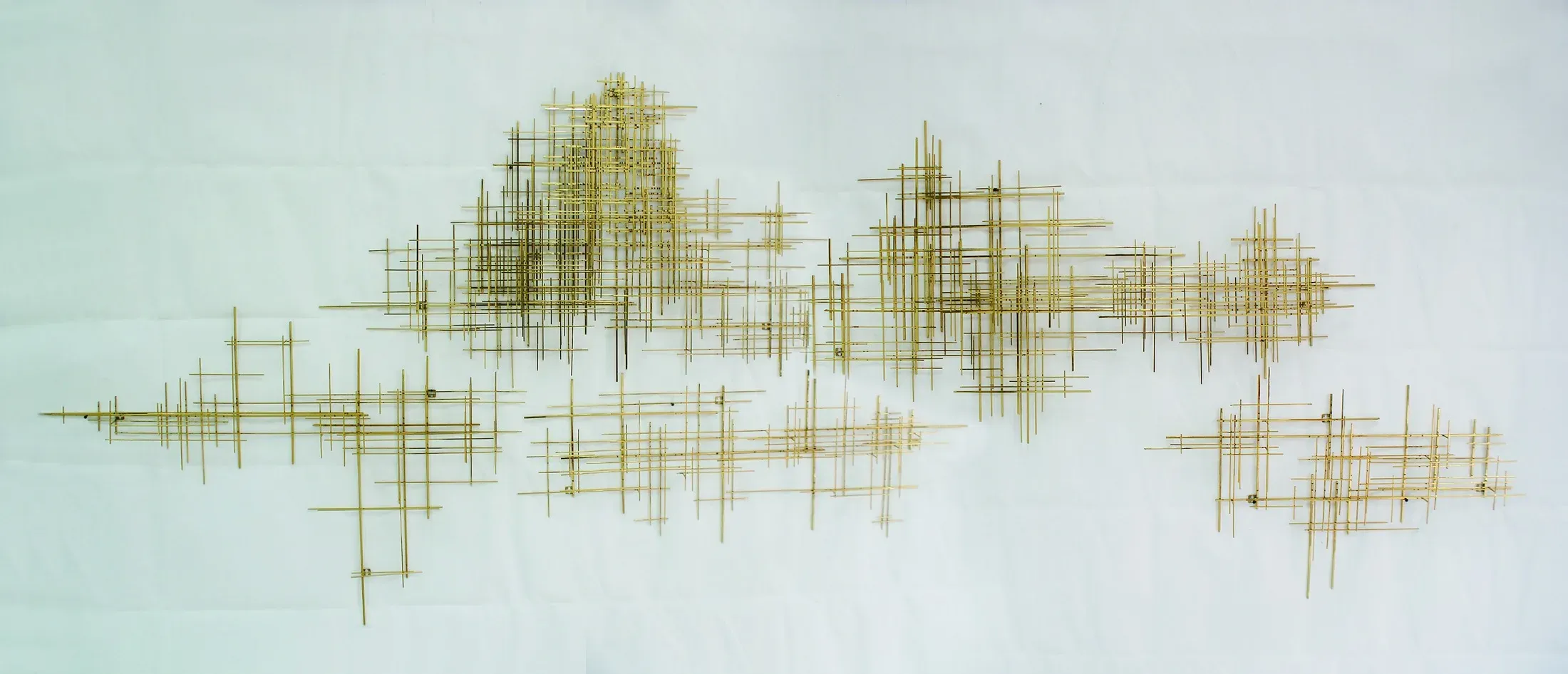
Grouped wall art can extend along a long wall, turn a corner, rise with a staircase or respond to an irregular ceiling line. Repeated elements create rhythm and allow the eye to travel through the space.
The flexibility is valuable, but it requires a controlled layout. Define the complete outside dimensions, spacing, orientation and installation order. Without an approved elevation or template, a group can become a collection of individually attractive pieces with no overall structure.
Let the architecture decide the direction
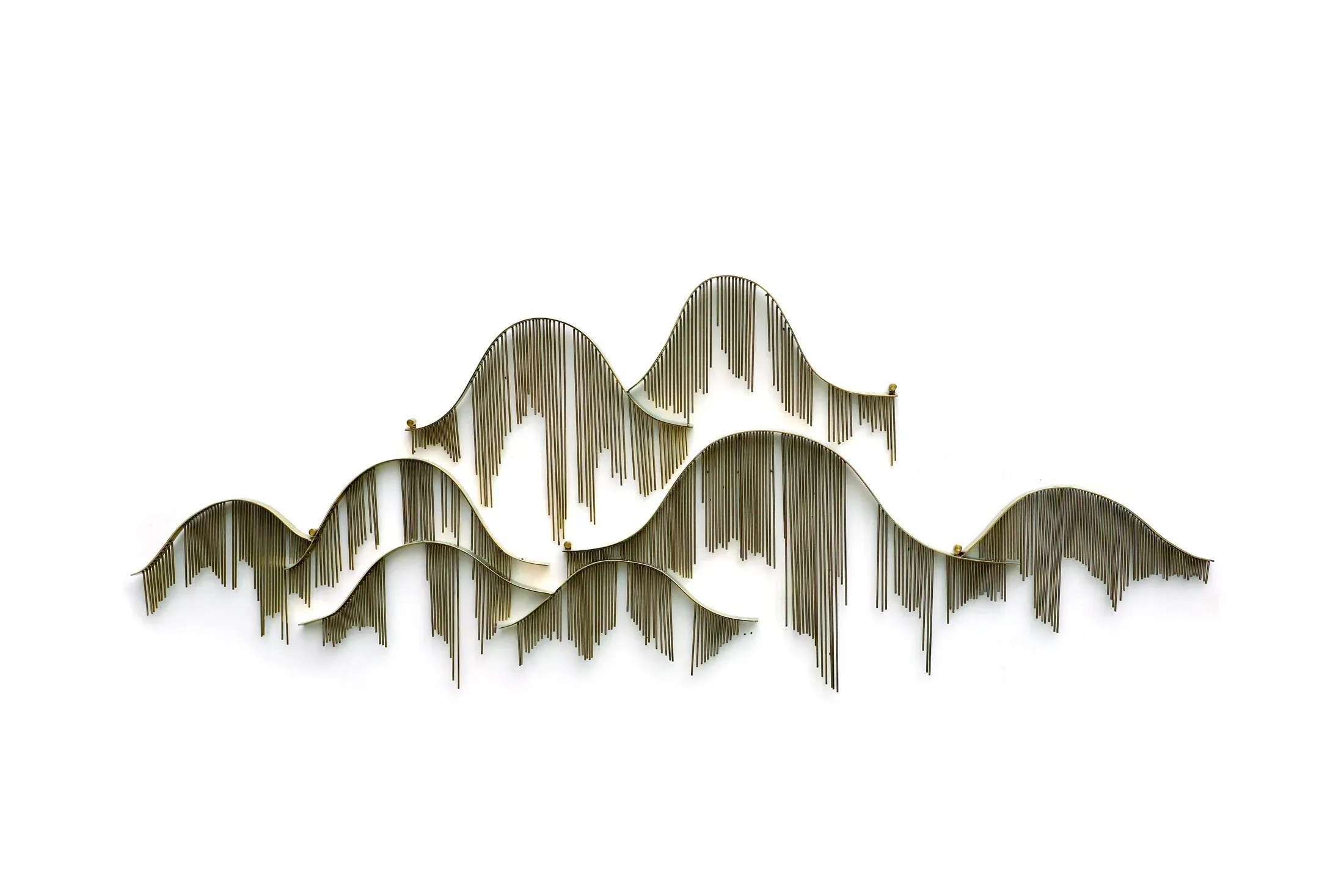
Read the wall as part of the circulation route. A long horizontal composition can lead the eye toward a view or destination. A vertical arrangement can emphasise height or occupy a narrow architectural bay. A centred single work creates a pause, while an offset group can balance asymmetrical furniture or joinery.
Avoid centring automatically. The most important alignment may be with a doorway, furniture group, stone joint or lighting axis rather than the middle of the wall.
Compare unity with variation
A statement piece feels unified because its parts are already composed. In a grouped installation, unity must be created through repetition. Repeat at least one quality: material, finish family, geometry, depth or spacing logic.
Variation prevents the group from becoming mechanical. Modules can change in size, orientation or density while sharing a clear visual language. The best grouped compositions feel related without looking duplicated.
For judging individual pieces by form, finish and depth before combining them, see how to choose metal wall art for an interior.
Judge scale from the main viewing distance
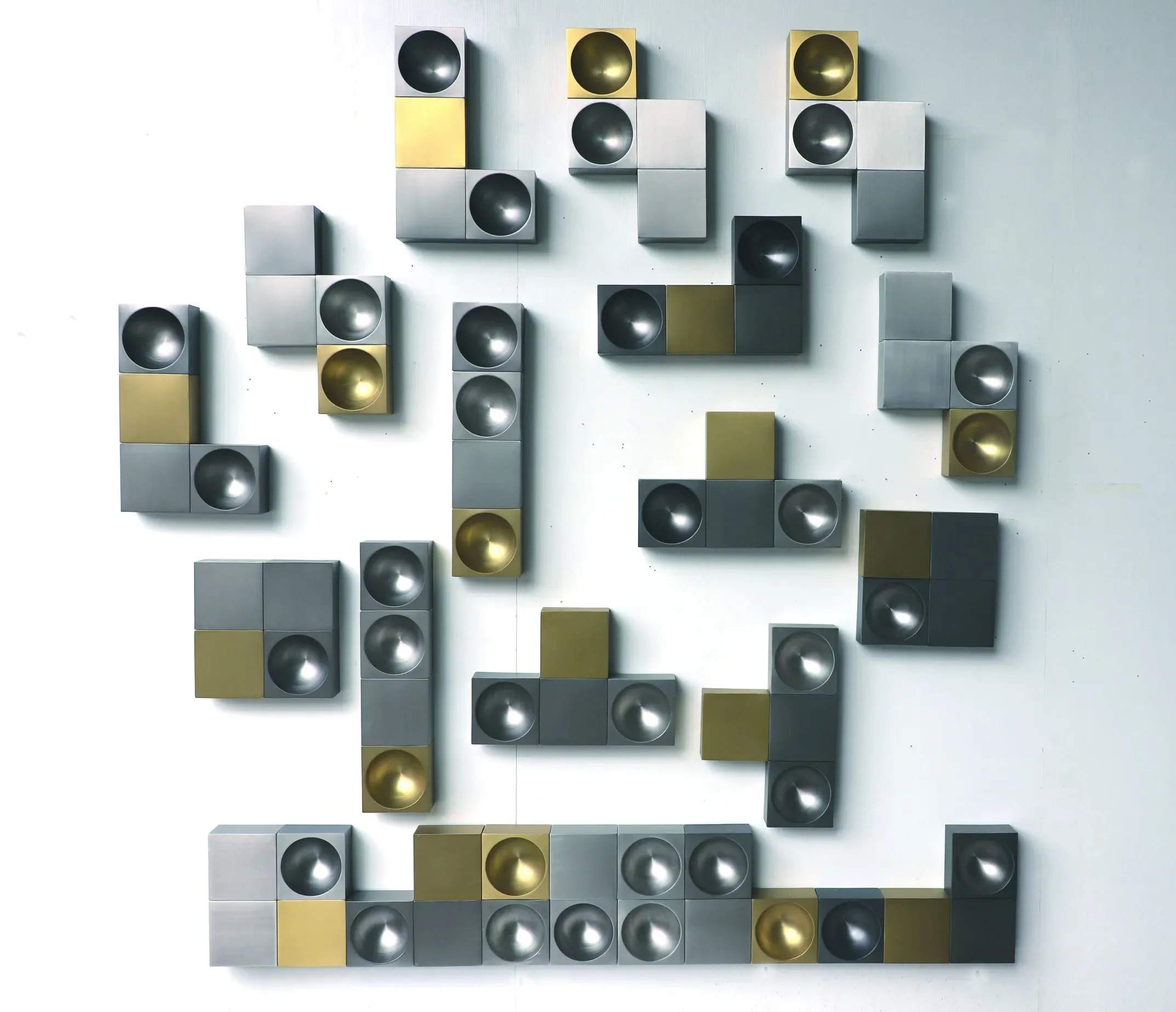
From across a lobby, small modules and narrow gaps may merge into one field. At close range, the same composition reveals every edge and fixing. Review both conditions.
Create a scaled elevation for the distant view and a full-size sample for the close view. For a residential wall, taped paper outlines can reveal whether the group feels coherent. For a hospitality project, a digital elevation should be checked against furniture, signage, lighting and key sightlines.
Use the wall art size and placement guide for measurement, viewing height and furniture relationships.
Coordinate lighting with the composition type
One statement work can often be lit with a focused wash or two controlled beams. A wide modular group needs more even coverage. If the pieces project from the wall, light will also create a pattern of shadows; uneven illumination may exaggerate some modules and weaken others.
Polished elements reflect the room as well as the light source. Test angles from the main viewpoint and avoid placing strong points of glare directly in the viewer's line of sight.
Consider installation tolerance
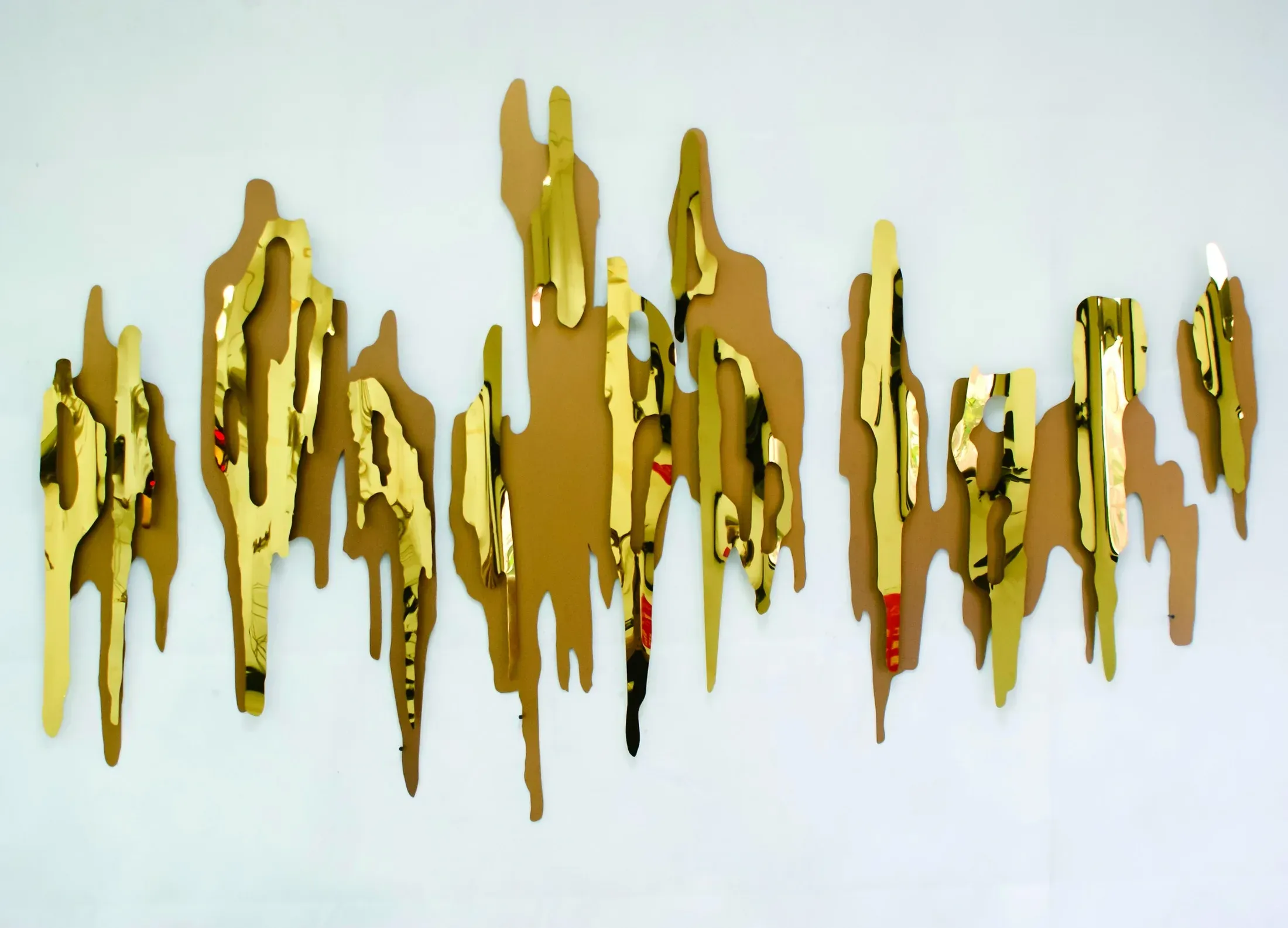
A large single piece may be simple to position but difficult to transport. Confirm lift, stair, doorway and turning dimensions. A modular composition is easier to carry in parts, although small spacing errors can accumulate across a long wall.
For grouped work, provide a full-size fixing template and a numbered installation sequence. Confirm how the system accommodates walls that are not perfectly level or flat. The installer should not need to redesign the rhythm on site.
When to use each approach
Choose one statement artwork when:
- the room needs a calm, dominant focal point;
- the furniture below has a clear centre;
- the surrounding materials are already expressive;
- the delivery route can accept the work;
- a defined outside dimension helps coordination.
Choose a grouped composition when:
- the wall is unusually long or irregular;
- the artwork should lead movement through the space;
- modular transport makes installation more practical;
- the layout needs to respond to stairs, openings or joinery;
- rhythm and changing viewpoints are central to the design.
Develop the composition before production
The decision is not simply one piece versus many. It is a choice between different ways of organising scale, rhythm and attention. Share the wall elevation, furniture layout, viewing points and lighting plan early so the artwork can be developed as part of the interior.
Explore KingDeco Studio wall art or contact the studio to review a single statement work, modular arrangement, custom scale or finish for a project.