Sep 9, 2026Buying Guides
Wall Art Size & Placement: A Designer's Guide
Learn how to choose wall art scale, position and viewing height using the wall, furniture, circulation and lighting as one composition.

Wall art compositions to study
These KingDeco Studio works show how width, rhythm, open space and reflective surfaces change the visual weight of a wall-art composition.

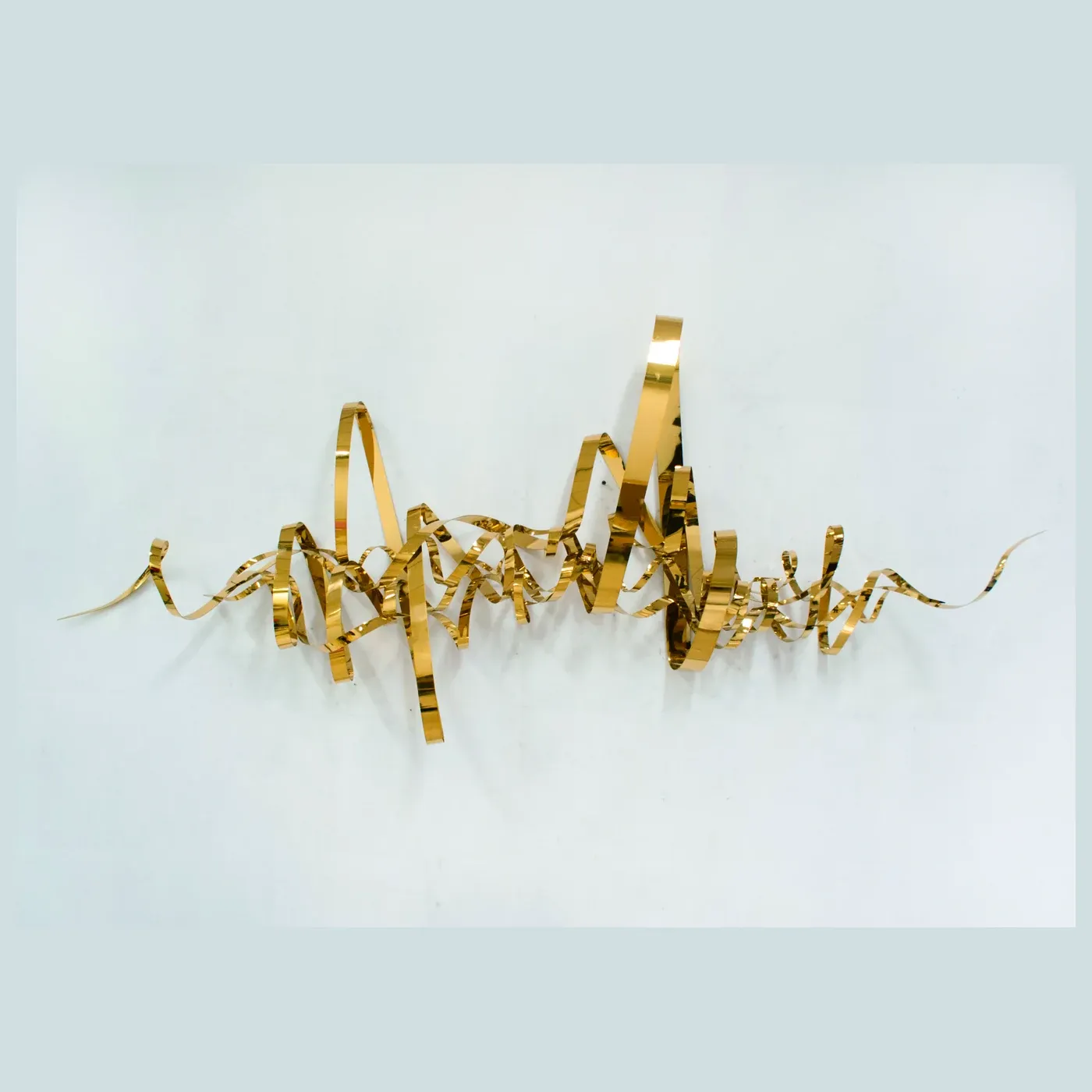
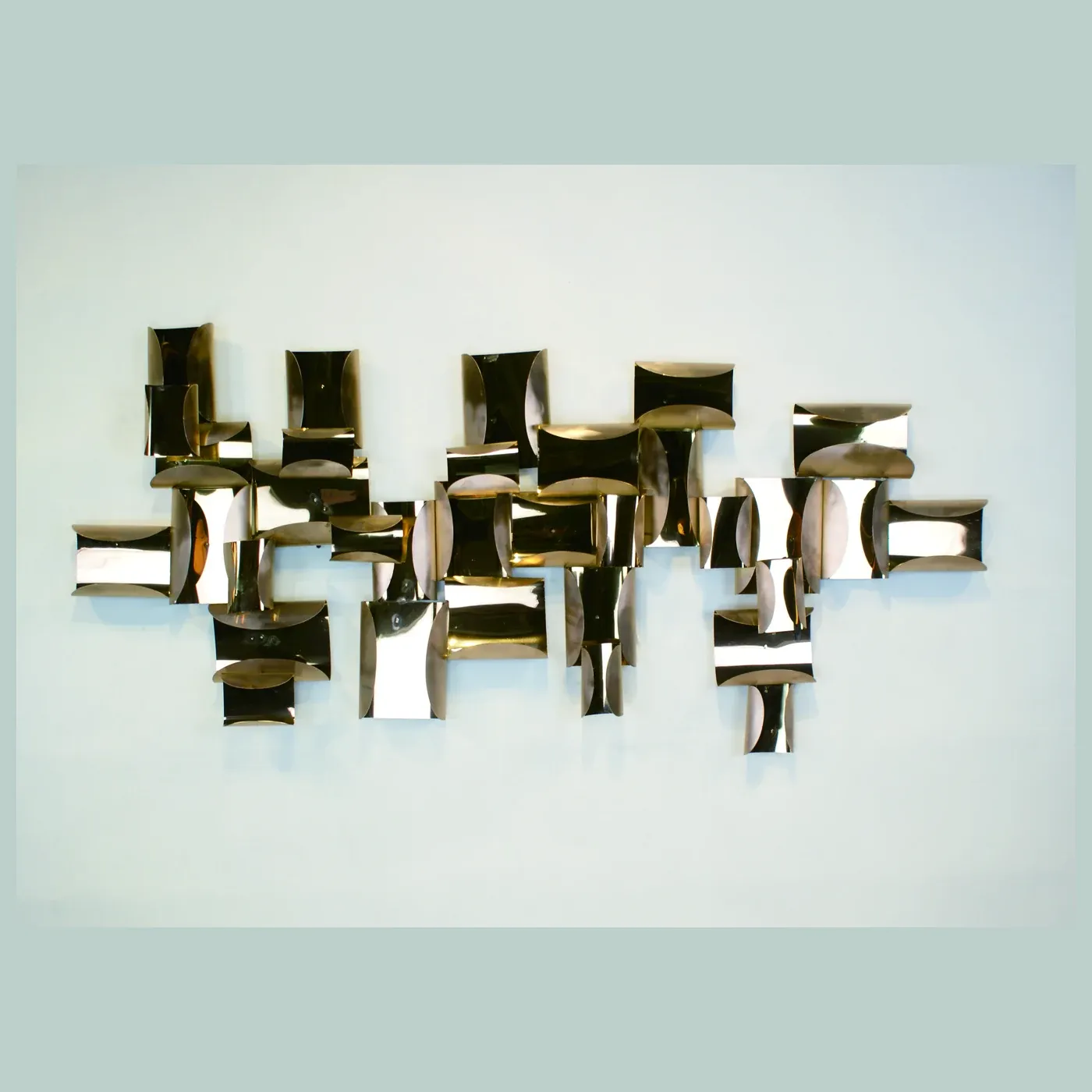
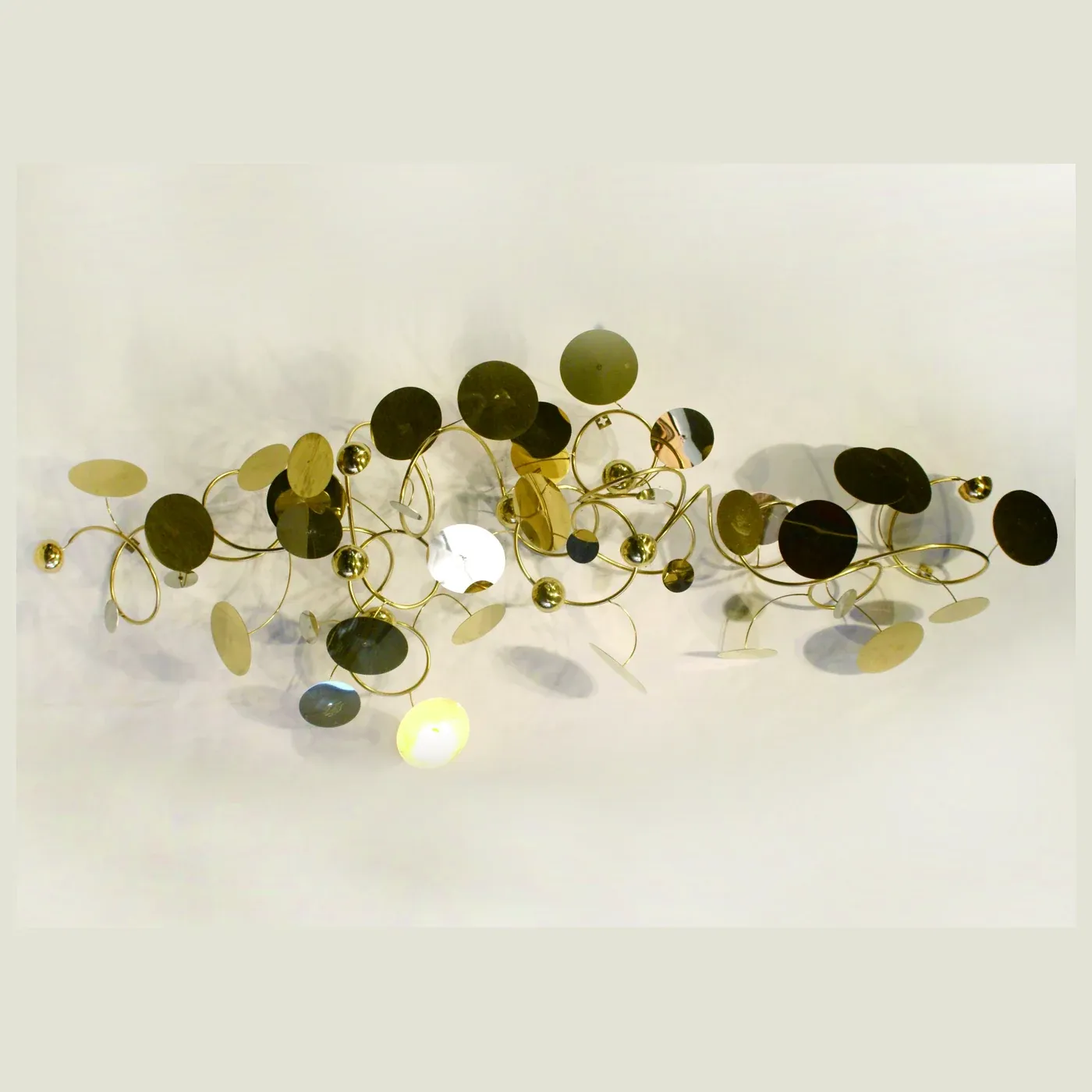
Wall art succeeds when it belongs to the architecture around it. A beautiful piece can still feel lost if it is too small for the wall, disconnected from the furniture or installed at an awkward height. The right placement creates a relationship between artwork, wall, furniture, circulation and light.
For sculptural metal wall art, scale matters twice: first as an outline on the wall and again through the shadows, reflections and depth that extend beyond it. Use the following method to judge the complete composition before fixing points are confirmed.
Start with the usable wall, not the room width
Measure the clear wall area between doors, windows, corners, switches, wall lights and built-in elements. This usable area is the true frame for the artwork. A five-metre room may offer only a two-metre uninterrupted wall once curtains, joinery and circulation are considered.
Record the wall width and height, then mark the principal viewpoint. Artwork seen from a doorway needs a clear silhouette. A piece viewed close-up in a corridor needs comfortable edge clearance and restrained projection. In a lobby, the composition may need enough scale to hold its own from several metres away.
Relate wall art to the furniture below it
Above a sofa, console or bed, treat the artwork and furniture as one group. As a starting point, a wall-art composition often feels balanced when its overall width is approximately two-thirds to three-quarters of the furniture width. This is a guide, not a rule. A visually light openwork piece may extend wider, while a dense reflective composition may need more breathing room.
Do not judge width alone. Check the gap between furniture and art, the remaining space above the art and the balance at both ends. If the furniture is asymmetrical, the artwork can align with its visual centre rather than its mathematical centre.
For a console arrangement, review accessories and lighting at the same time. A lamp or tall object can shift the perceived centre of the composition. The console table sizing guide — https://www.kingdecostudio.com/posts/how-to-choose-a-console-table provides a useful base for coordinating the furniture footprint.
Choose installation height from the viewing experience
Gallery-style eye-level rules are useful only when the wall is viewed while standing and nothing sits below the artwork. In interiors, furniture, ceiling height and the typical viewing position matter more.
For art above furniture, begin with the lower edge rather than the artwork centre. The gap should be close enough for the two elements to read together, but generous enough to protect the artwork from objects placed on the surface. For dining rooms and lounges, test the piece from seated eye level as well as standing height.
In a stair hall or double-height space, a high centre can be appropriate, but the lower edge still needs to connect visually with the occupied zone. Use a full-size paper template or taped outline before drilling.
Select one piece or a grouped composition
A single large work creates a calm focal point and makes the silhouette easy to read. A grouped installation introduces rhythm and can adapt to a long wall, changing ceiling line or irregular architecture.
When grouping modules, measure the outside dimensions of the complete composition, including gaps. Small gaps create a unified field; wider gaps make the modules read as separate objects. Confirm the layout on the floor or in an elevation drawing before marking the wall.
The arrangement should feel intentional from the main viewpoint. Avoid adding a final small element simply to fill a leftover space. Negative space is part of the composition.
Account for visual weight, not just dimensions
Two works with the same width can feel very different. A dense dark form appears heavier than an open linear structure. Mirror-polished surfaces expand visually by reflecting the room, while a fine open framework may need greater physical width to achieve equal presence.
Consider:
density and open space; colour contrast with the wall; reflective or matte finish; depth and shadow; symmetry or directional movement; the strength of nearby stone, timber or patterned surfaces.
If the interior already contains expressive marble, lighting and furniture, quieter wall art may complete the room more effectively than another dominant gesture.
Plan projection, fixing and circulation
Sculptural wall art does not sit entirely within the wall plane. Confirm its maximum projection and ensure it will not conflict with doors, curtains, people or cleaning equipment. In narrow corridors, shallow relief is usually more comfortable than deep elements at shoulder height.
The wall construction must support the artwork and fixing system. Record whether the substrate is concrete, masonry, stud wall, stone cladding or joinery. Heavy or multi-part work may require concealed reinforcement and a fixing template coordinated before finishes are complete.
Use light to reveal form without glare
Directional light can reveal the depth of metal wall art and create a secondary shadow composition. Test the beam angle so that it does not flatten the work or create harsh reflected hotspots. Daylight can change the appearance throughout the day, especially with polished gold, stainless steel and mirror surfaces.
Review a finish sample vertically under the intended lighting. The mirror versus brushed stainless steel guide — https://www.kingdecostudio.com/posts/mirror-vs-brushed-stainless-steel explains how reflection and grain direction change the visual result.
A practical wall-art measurement brief
Before requesting a recommendation or quotation, provide:
wall width and height; a straight-on photograph or elevation; furniture dimensions and position; principal viewing distance; desired overall mood and visual strength; wall construction and finish; nearby lighting and daylight direction; installation location and access; preferred metal colour or finish; target programme and quantity.
Choosing wall art for a project?
Explore current KingDeco Studio wall art — https://www.kingdecostudio.com/products?category=wall-art, including Wall Art S2-73 — https://www.kingdecostudio.com/products/wall-art-s2-73, S2-71 — https://www.kingdecostudio.com/products/wall-art-s2-71 and S2-69 — https://www.kingdecostudio.com/products/wall-art-s2-69. For a project-specific scale, finish or composition, send the wall elevation and room details to the studio — https://www.kingdecostudio.com/contact-us.