Sep 12, 2026Buying Guides
How Large Should Wall Art Be? A Sizing Guide for Hotels, Lobbies and Commercial Spaces
How large should wall art be in a hotel, lobby or commercial interior? Use wall proportion, viewing distance, furniture relationships and grouped compositions to size artwork with confidence.
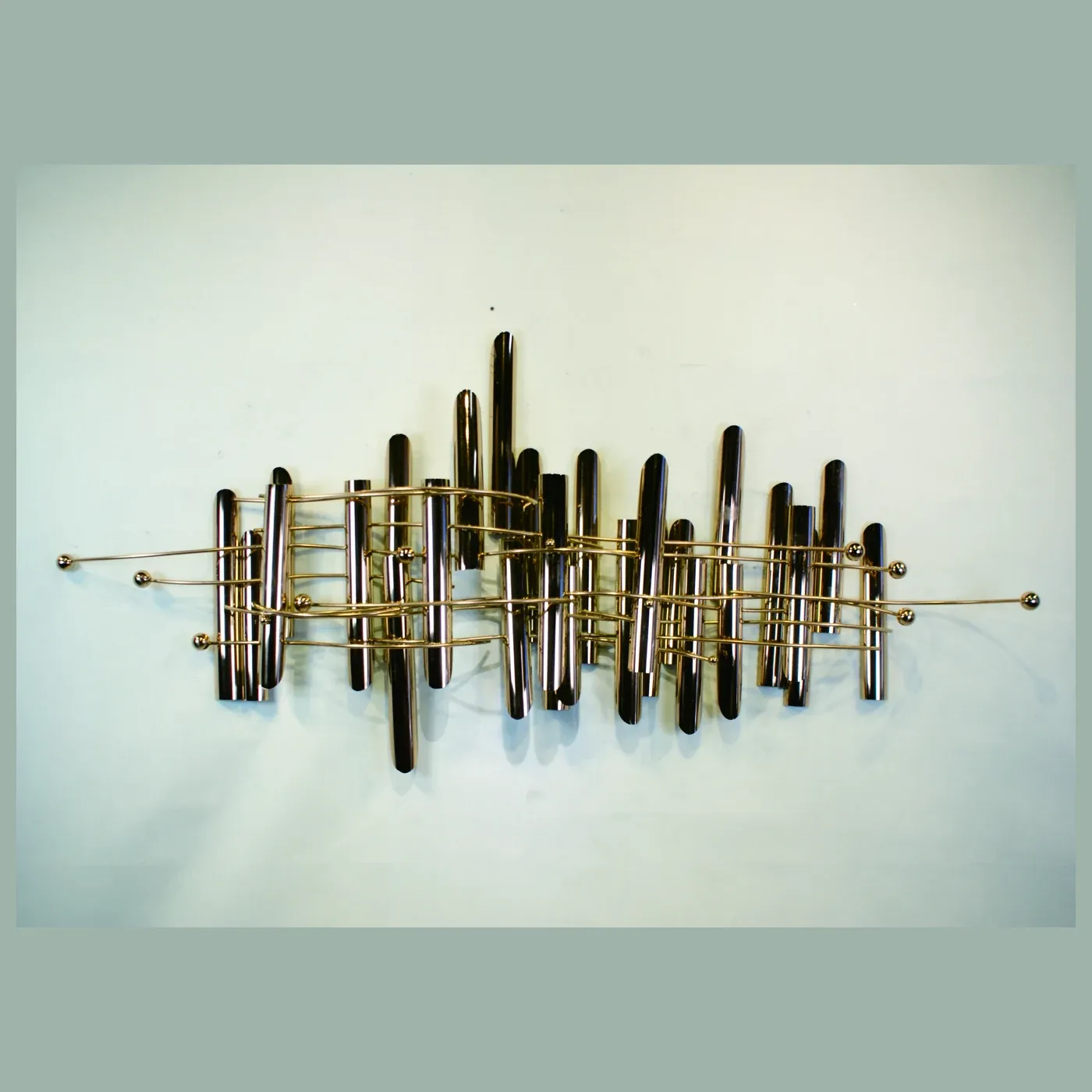
"How large should wall art be?" sounds like a question with a fixed answer. In commercial interiors it does not have one.
The right size depends on the wall, the viewing distance, the furniture and the role the artwork plays in the space. A hotel lobby, a restaurant dining room and a lift lobby can all call for completely different dimensions from the same collection.
What follows is the practical sizing logic we use when advising on metal wall art for hotels, offices, restaurants and retail spaces—and how to confirm the size before anything is fabricated.
Start with the wall, not the artwork
The wall sets the boundaries of the decision.
Measure the clear wall area first: the width and height available after doors, joinery, switches, signage and structural elements are accounted for. Artwork that ignores these boundaries ends up fighting the architecture around it.
As a starting point used across many commercial projects, a single statement piece typically relates to roughly one-half to two-thirds of the width of the furniture or wall zone beneath it. Wide walls usually suit wider compositions or grouped arrangements rather than one oversized panel pushed to the centre.
These proportions are starting points, not rules. A restrained interior may want a smaller, more confident piece; a dramatic double-height lobby may justify artwork that occupies most of the vertical plane.
Let viewing distance drive the size
Viewing distance changes everything about how large artwork should be.
Across a large lobby, guests first see artwork from ten metres or more. At that distance, fine detail disappears and only overall form, silhouette and finish read clearly. Artwork viewed from far away generally needs a stronger scale and bolder structure than a piece experienced at arm's length.
In corridors, lift lobbies and staircases, guests pass close by. Here, medium-scale pieces, texture and material detail become the experience, and a collection of smaller works can outperform a single large panel.
Before fixing a size, stand where the viewer will stand. If the artwork is hard to "read" from the main approach, it is probably too small for that position.
Relate the size to the furniture beneath it
Artwork above a reception desk, console, sofa or sideboard should sit in a clear proportion to that furniture.
The common starting point: the artwork's width relates to the width of the furniture below it rather than to the wall as a whole, so the two read as one composition. Leaving breathing space on either side keeps the arrangement deliberate rather than cramped.
In hotels this frequently means sizing artwork to the full length of a reception desk or a bed head wall, then adjusting the height so the piece clears lamps, screens and signage.
Use grouped compositions to cover large or awkward walls
When one piece cannot realistically be made large enough, size can also come from arrangement.
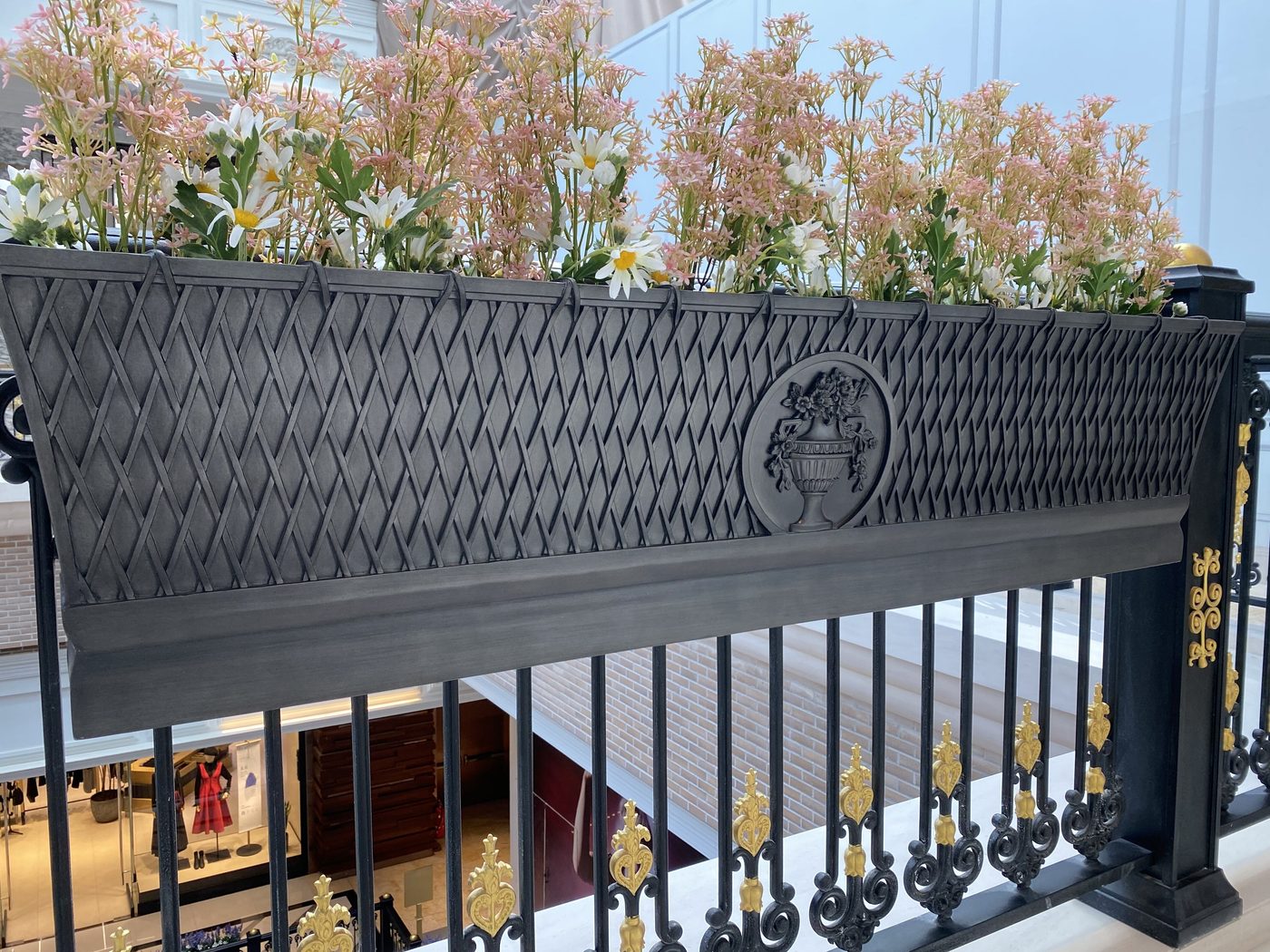
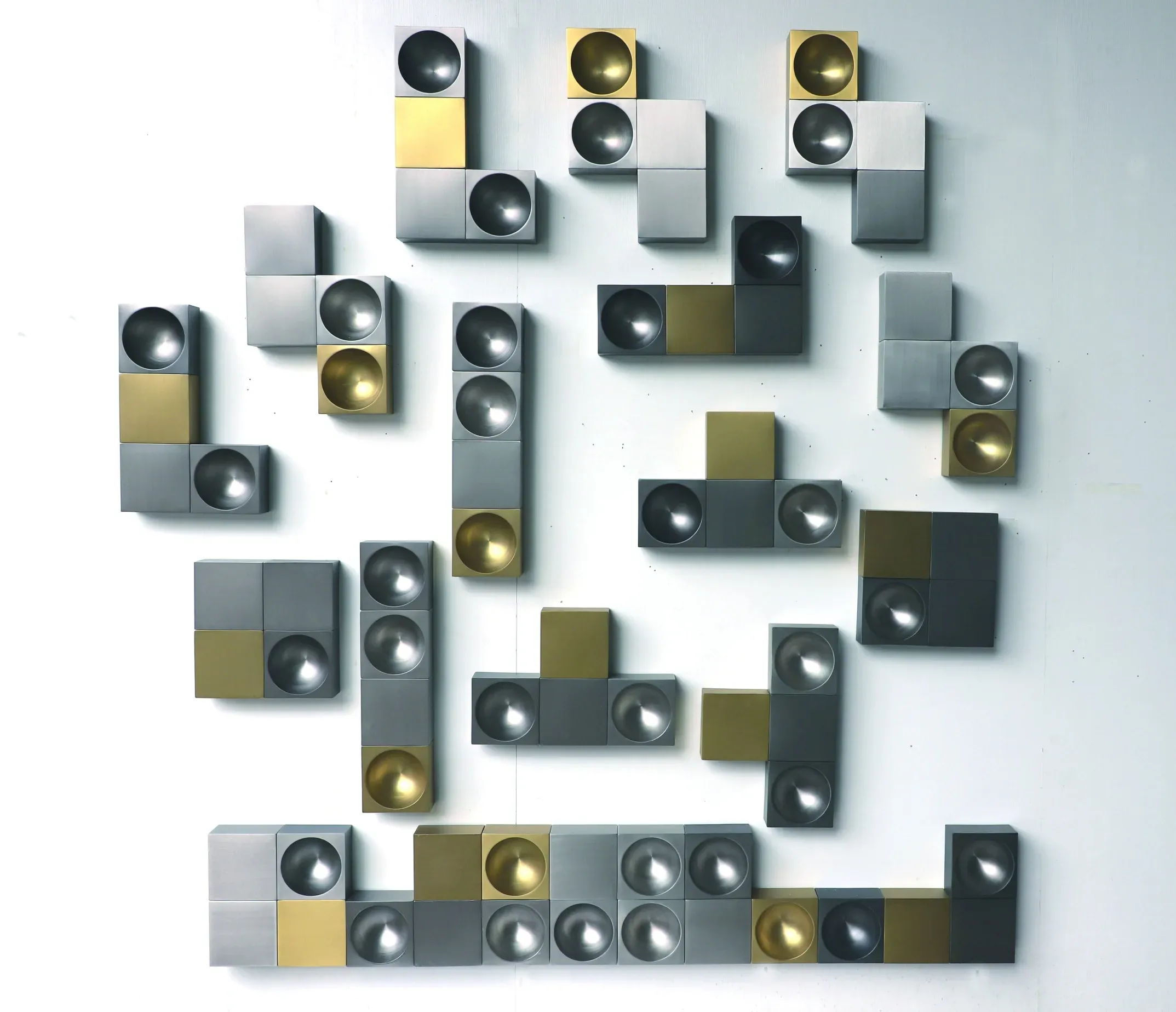
A grouped composition—several related elements planned as one installation—can fill a long wall, rise up a staircase or follow an irregular ceiling line while staying visually light. The total installed size can be very large even when each element remains manageable to produce, ship and install.
Grouping only works when it is designed as one composition. The overall envelope, the spacing between elements and the installation sequence all need to be fixed before production; otherwise the result becomes a collection of separate pieces rather than a single artwork. The difference between the two approaches is covered in statement wall art or a grouped composition.
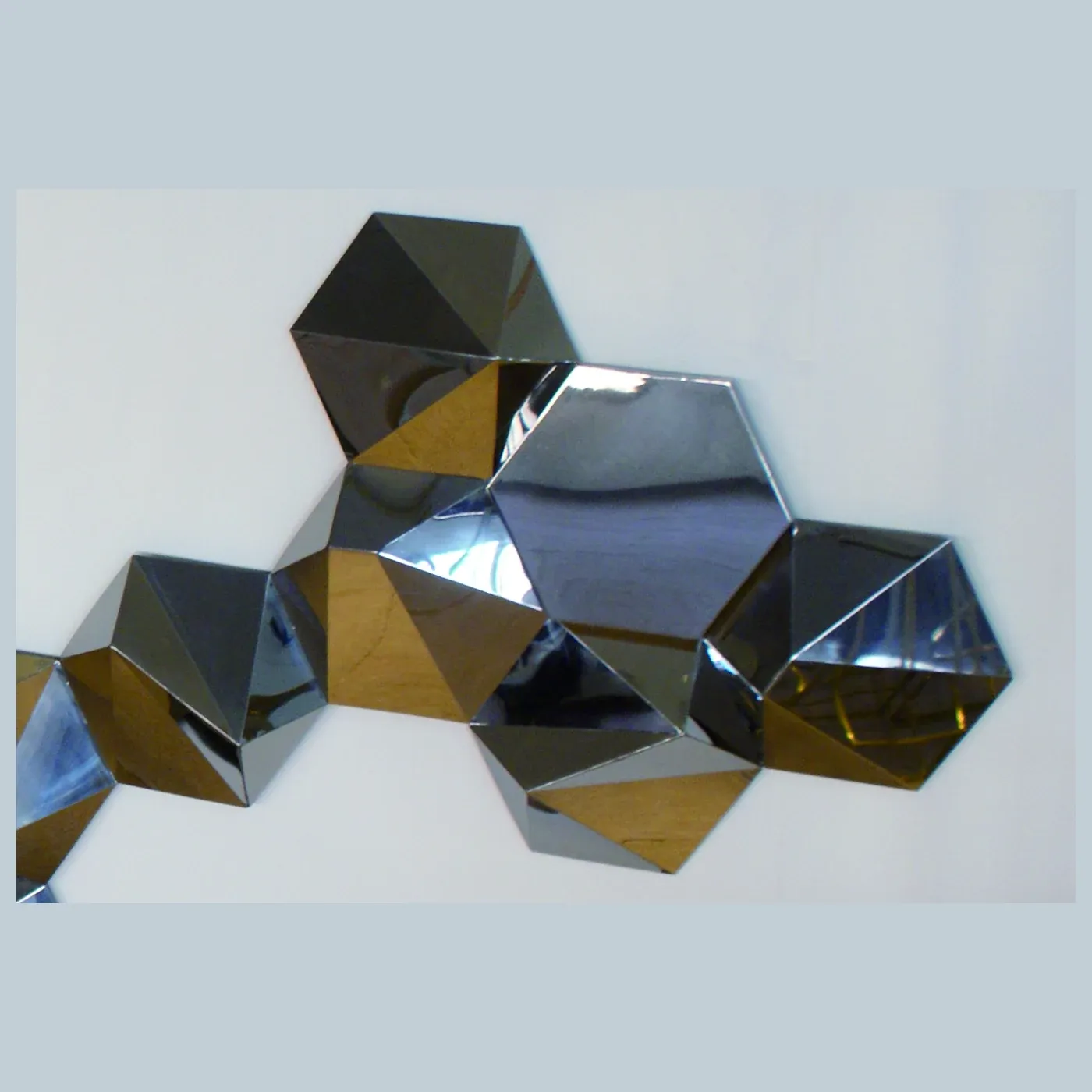
Modular systems extend the same idea: repeated units such as faceted tiles or rod clusters can expand or contract to fit the measured wall, which makes them particularly forgiving for projects where final dimensions are confirmed late.
Mind the practical limits of very large artwork
There is a real ceiling on how large a single piece should be.
Lift, door and corridor dimensions constrain the size of anything shipped complete. Wall construction affects what can be fixed where. And very large panels become harder to pack, transport, handle and install without risk.
For these reasons, oversized installations are frequently divided into sections that assemble on site. The visible result is one continuous artwork; the practical result is something a site team can actually receive and install. Weight, fixing points and panel division belong in the conversation at sizing stage, not after the order.
Confirm the size before production
The most reliable way to answer "how large" is to test the size before committing.
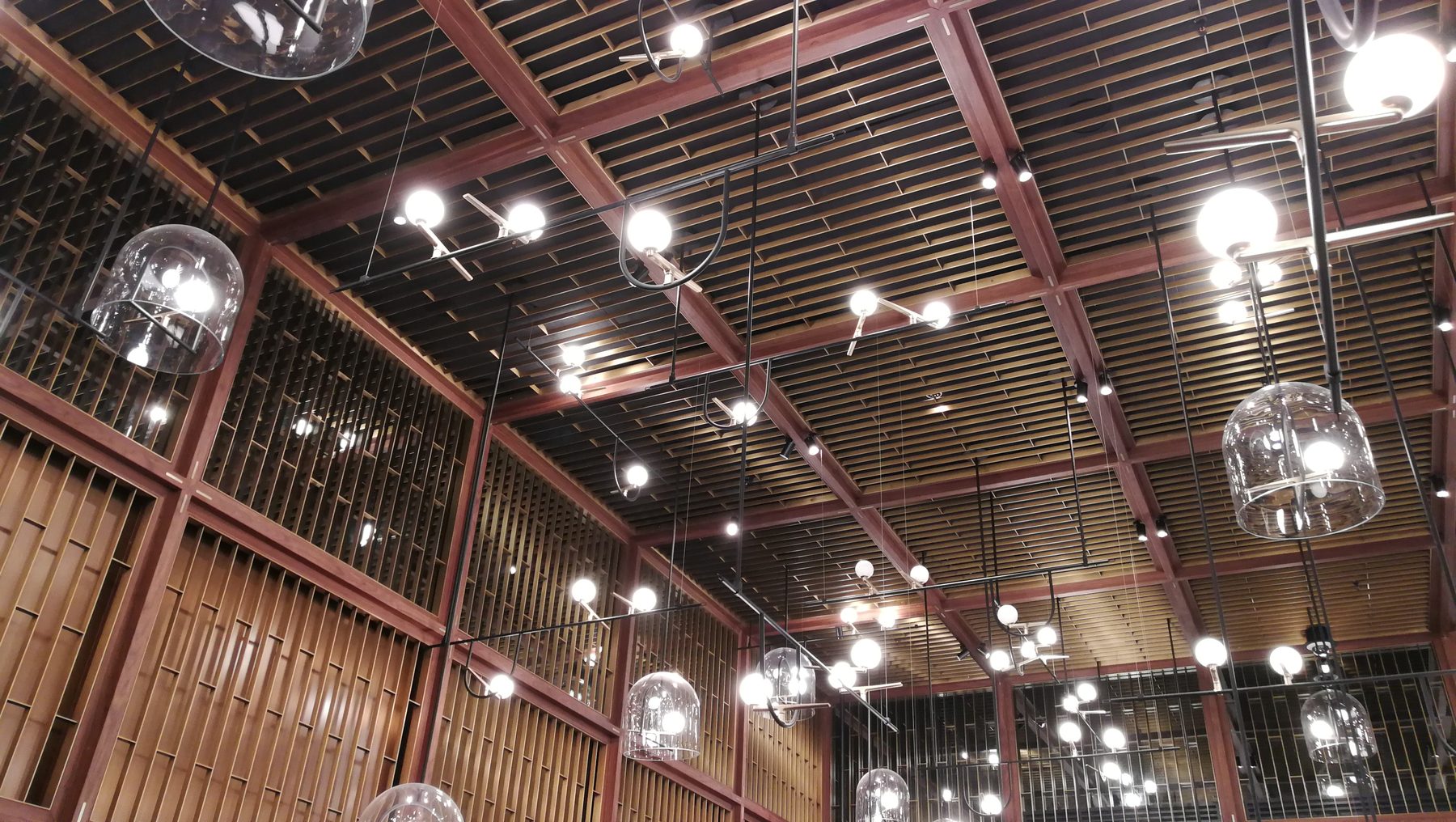
In practice this means an interior elevation with the artwork drawn to scale, reviewed from the main viewing positions. For key feature walls, a full-size mock-up or taped outline on the wall reveals within minutes whether a proposed size feels right.
Scale mistakes are far cheaper on paper than in metal. Suppliers who work from elevations rather than product photographs can also adjust proportions, divide panels or suggest grouped arrangements before fabrication begins.
Bringing the decision together
A workable sizing answer usually combines:
- the clear wall dimensions and boundaries;
- the main viewing distance and approach;
- the furniture relationship below or beside the artwork;
- the role the piece plays—accent, focal point or narrative feature;
- the transport and installation limits of the site.
If those are known, the size usually suggests itself—and if they change late, a bespoke or adapted composition can absorb the change far more easily than a fixed catalogue piece.
For the general principles of hanging height and placement, see the wall art size and placement guide. For choosing the piece itself in a commercial context, see how to choose metal artwork for commercial interiors.
Get the size right for your project
KingDeco Studio develops metal wall art and sculpture to the measured wall—explore the artwork collection or send your wall dimensions, elevation or reference image and we will propose scale, composition and finish options before production.