Oct 2, 2026Buying Guides
How Metal Wall Art Is Made: From Design to Installation
Behind the scenes of metal wall art production—design development, cutting, forming, welding, finishing, PVD, QC and installation-ready packing. What buyers should know.
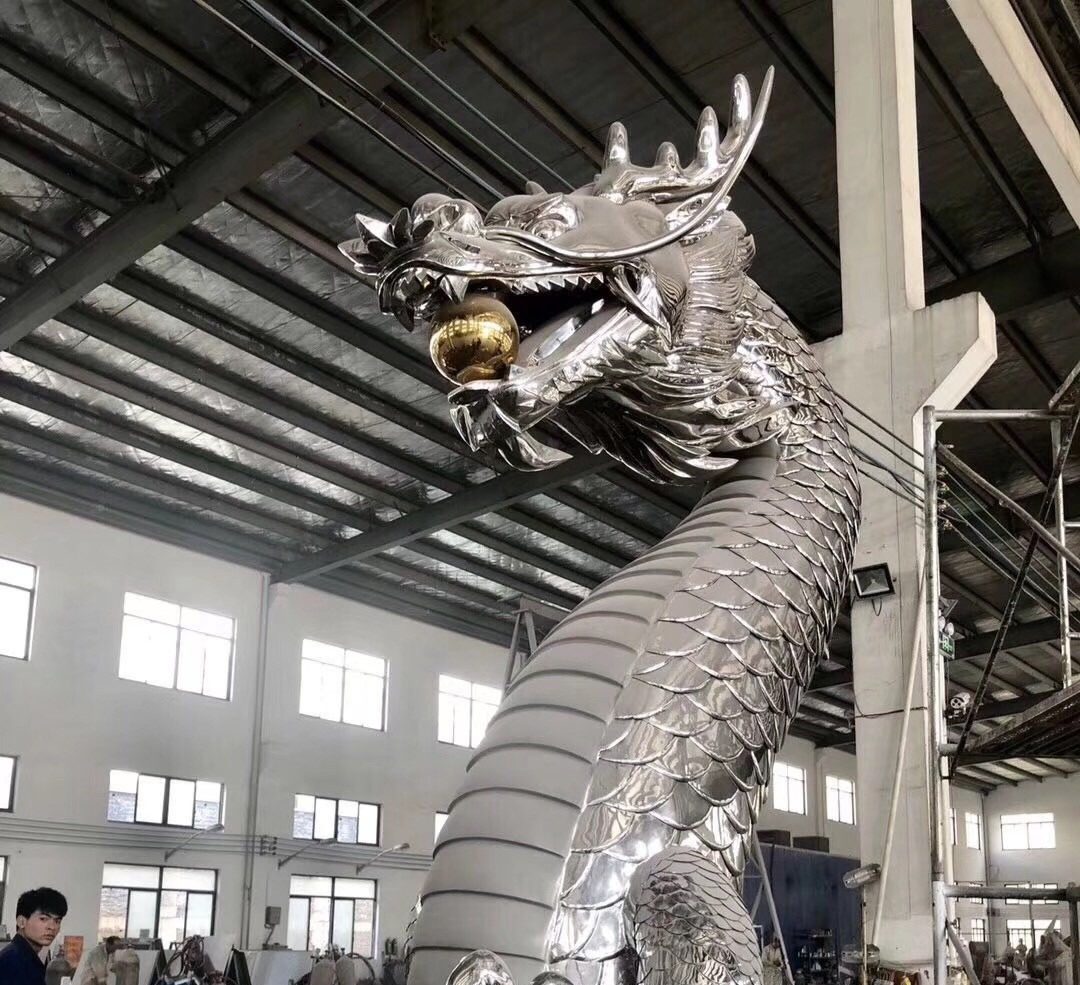
Most people meet metal wall art as a finished object—polished, precise, hanging in a lobby. The process behind it is a chain of craft and industrial steps where each one either protects or compromises the final result. Knowing that chain is useful for anyone specifying the work: it explains lead times, tells you which questions to ask a manufacturer, and shows exactly where quality is won or lost.
1. Design development: from image to buildable artwork
Production begins long before metal. A concept—an interior rendering, a reference image, a hand sketch—is developed into a technical drawing: full dimensions, panel divisions, layer depths, fixing points and material specifications.
This is where scale, proportion and the practical questions (how it divides for transport, how it fixes to the wall type, how it tolerates the site) are resolved. A beautiful rendering that ignores fabrication is a cost problem waiting to happen. The development stage is also where a client approves finishes and samples; the decision framework is in custom vs ready-made wall art.
2. Cutting: laser precision on stainless and brass
Modern metal artwork starts at the laser cutter. Designs are nested onto stainless steel, brass or aluminium sheets and cut by fibre laser at millimetre precision—the intricate line work, perforations and silhouettes that define sculptural metal pieces are only economical this way.
Waterjet cutting serves certain materials and thicknesses where heat could affect the edge. Which cutting method a workshop chooses for which job is a good early question about a supplier.
3. Forming and layering: giving flat metal depth
Cutting produces flat parts; artwork needs depth. Parts are bent, rolled, pressed and embossed on press brakes and forming tools. Layered compositions—front silhouette raised above a background layer on standoffs—are assembled element by element, and this is where the artwork's shadows and three-dimensional character are created.
Sculptural and freestanding pieces add welding: TIG welding on stainless and brass, done by hand, joint by joint. Weld quality is invisible in photographs and decisive in reality—smooth, consistent welds ground and re-finished into the form, versus porous beads that show and trap dirt for the piece's life.
4. Surface preparation: the invisible step that decides everything
Before any finishing, every surface is ground, sanded and cleaned. This stage determines how the final finish will read: a mirror finish is built through progressively finer abrasives; a brushed finish through controlled directional belts; a textured finish through rolling or pressing.
Shortcuts here cannot be hidden later. Finishing magnifies preparation—this is why two pieces with identical drawings can look completely different from two workshops.
5. Finishing: mirror, brushed, textured and PVD colour
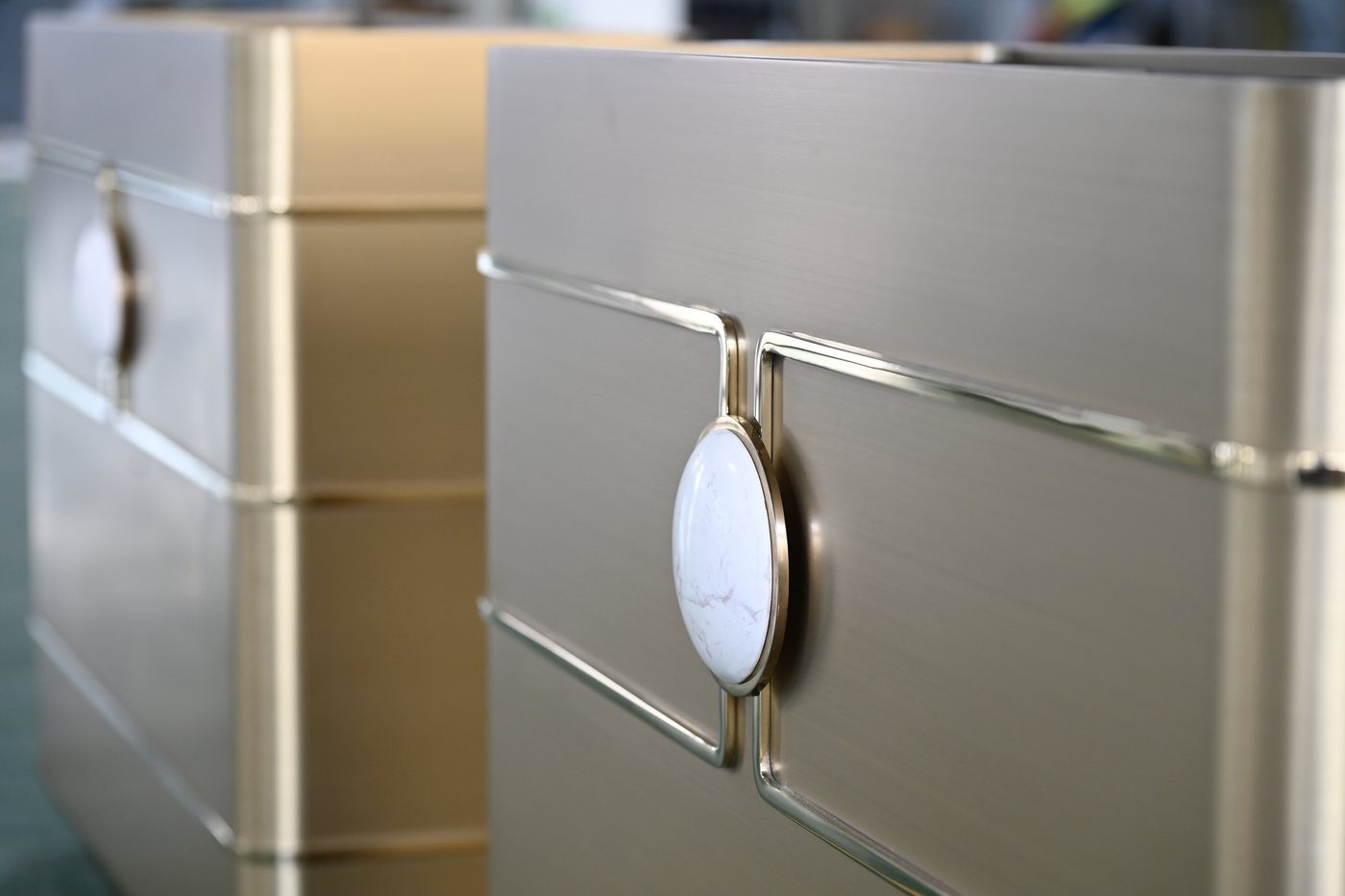
The prepared surface receives its final finish: mirror polishing, directional brushing, or texture, followed where specified by PVD colour deposition in vacuum chambers—gold, champagne, rose gold, bronze, black. The process and colour families are explained in PVD finishes explained, and the two base finishes in mirror vs brushed stainless steel.
Anti-fingerprint treatment is applied where specified—standard for pieces in public and hospitality spaces.
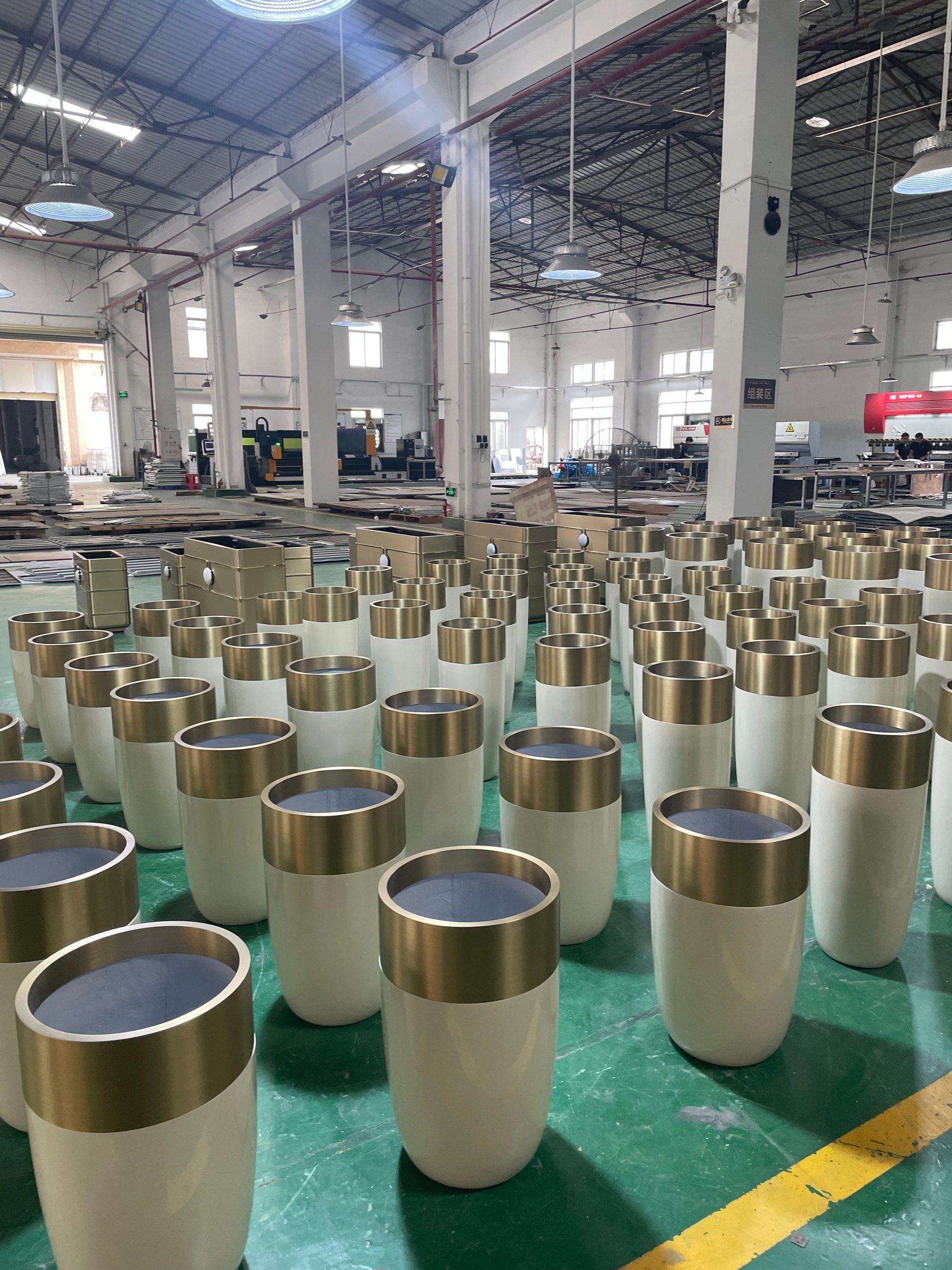
6. Quality control: checking what photographs cannot show
Serious production includes inspection before packing: surface checks under raking light (which reveals what flat lighting hides), dimensional verification against the approved drawing, weld and joint inspection, finish consistency across panels, and a dry-fit of multi-part installations.
For project work, buyers should ask what QC is included and request photographs at the stages that matter—post-finishing and pre-packing are the two that catch almost everything.
7. Packing and installation-ready delivery
The last risk is transport. Finished pieces are protected with surface film, foam and custom crating; large works are divided into numbered sections with assembly drawings and hardware, so a site team can install without meeting the maker. Packing engineering is a real discipline—most damage claims in this industry are packing failures, not production failures.
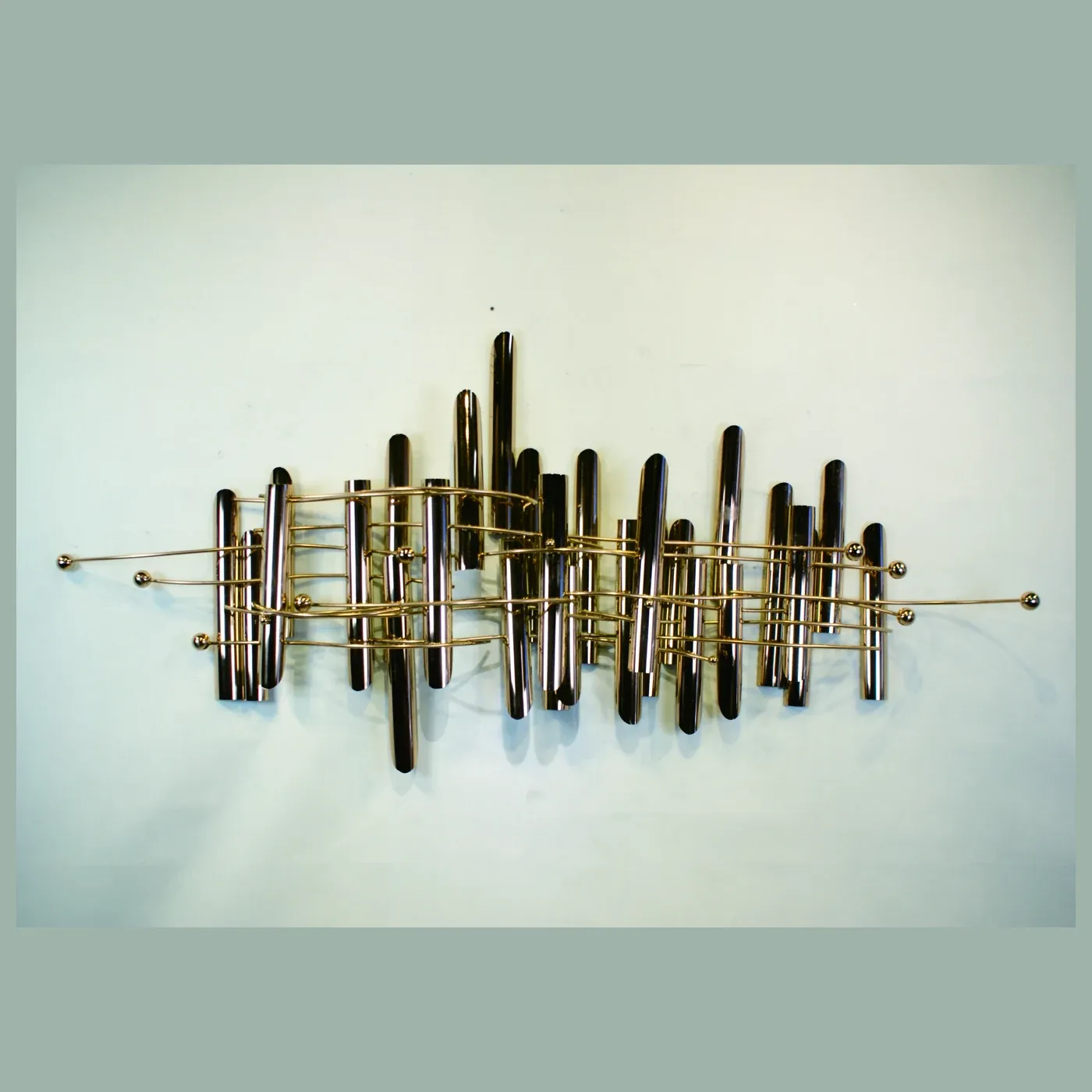
What buyers should take from the process
Three questions reveal a manufacturer quickly: Who does the forming and welding in-house? How are surfaces prepared before finishing? What does your QC check, and what photos do you provide? Confident answers to those three cover most of the risk in commissioning metal artwork.
The finish-selection decisions that sit on top of this process are in PVD finishes explained, and the route options—collection, adapted or fully custom—in custom vs ready-made wall art.
See the process in your own project
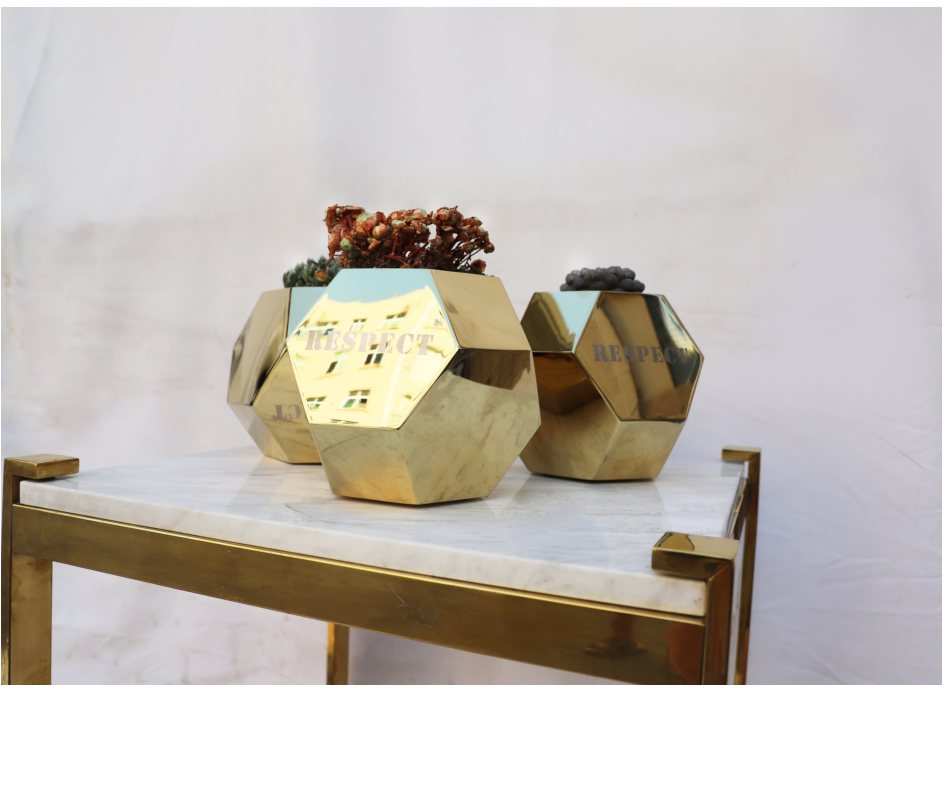
KingDeco Studio runs its own production in Zhongshan, Guangdong—design development, laser cutting, forming, welding, polishing, PVD finishing and export packing under one management, for wall art, screens, sculpture and planters shipped to projects worldwide. Start from a rendering, elevation or reference image via the bespoke process.